
When sourcing from China, Alibaba is widely used — but for newbies, safety is often a real concern. Common worries include product and supplier quality, payment safety, and whether refunds are possible when problems occur.
In this post, I’ll walk you through the real risks, how they actually play out, and how to avoid common mistakes.
Don’t skip this if you’re new to Alibaba — many buyers learn these lessons the expensive way.
- Alibaba is generally safe — but supplier quality varies.
- Trade Assurance protects buyers — not instant refunds.
- “Verified Supplier” is a membership badge, not a quality guarantee.
- Unrealistically low prices are often the first red flag.
- Payment safety – avoid off-platform payments.
- How to avoid bulk order quality issues?
- How to identify safer suppliers?
Alibaba is generally safe — but supplier quality varies.
Alibaba itself is a legitimate and widely used B2B platform, but supplier quality varies widely. For the same product, you’ll often see thousands of suppliers, with huge differences in price and quality.
Put simply, this is how online sourcing works — the platform doesn’t choose suppliers for you. Buyers need to communicate more, compare options carefully, and assess supplier quality on their own.
Trade Assurance protects buyers — not instant refunds.
Trade Assurance is an important layer of buyer protection when sourcing on Alibaba. In dispute cases, the platform generally aims to protect buyers’ interests.
Buyers can win disputes when sufficient evidence is provided, as long as product specifications, quality standards, and delivery terms are clearly written into the order. This is also why some Chinese suppliers are not fully enthusiastic about Trade Assurance — they are concerned about malicious refund requests or unreasonable claims.
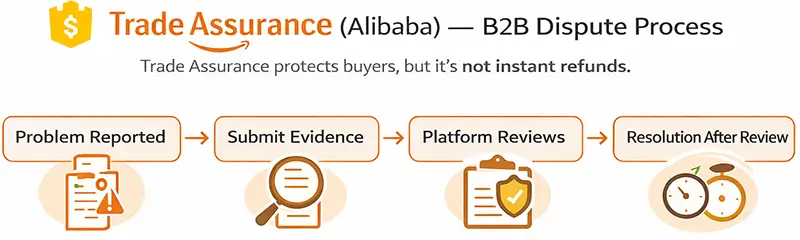
That said, Alibaba is a B2B platform, so the after-sales process works very differently from B2C platforms like Amazon, where refunds are often issued almost instantly. Disputes are handled more like formal business cases. Both sides submit evidence, and the platform reviews the case step by step — so it’s normal for the process to take several weeks, or up to a month.
Many negative experiences shared on Reddit come from small, personal-use purchases, such as buying one or two lawn mowers that run into customs issues or don’t fully match expectations after delivery. In these cases, buyers often expect B2C-style after-sales treatment, which leads to frustration when the outcome feels different from what they’re used to.
What’s new: Alibaba Guaranteed (since 2024)
Alibaba Guaranteed is an upgraded version of Trade Assurance, with logistics and after-sales handled directly by Alibaba, but it’s not a one-size-fits-all solution.
- Applies to standardized RTS (Ready-to-Ship) products. Currently available in six markets, not globally.
- For custom products, disputes still require evidence from both buyers and sellers, and the overall dispute resolution process has not fundamentally changed.
“Verified Supplier” = a membership badge, not quality assurance.
On Alibaba, most suppliers you see are “Verified Suppliers.” But Verified ≠ quality ≠ reliability.
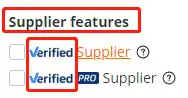
The badge simply means the supplier paid an annual fee and passed a basic third-party check. It’s a membership label — not a quality filter. So don’t assume a supplier is reliable just because they’re verified.
Unrealistically low prices are often the first red flag.
On Alibaba, prices that look too good to be true usually mean the cost shows up somewhere else later. For example:
Compromised quality
Cheaper materials or downgraded manufacturing processes — in some cases, it’s not even the same product anymore.
Inflated shipping costs
Makes the money back through shipping. New buyers often fall into this trap, while experienced buyers focus on the total landed cost, not just the unit price.
Low initial quote, price increases later
A very low price to make you pay a deposit, but later the supplier asks for more money with reasons like fabric cost went up, labor is more expensive, or increased production complexity.
Branded products at very low prices
For example, cheap MacBooks, DJI drones, TCL TVs, Surron e-bikes, or even luxury cars, are usually unauthorized and are difficult to clear customs.
Viral products with IP risks
Popular products on Amazon or TikTok that appear at unusually low prices on Alibaba are especially prone to IP infringement risks.
Suppliers focus on production and sales, while IP checks are typically left to buyers — this isn’t about taking the supplier’s side. And it’s not just first-time sellers; even some mid-sized and experienced buyers occasionally get caught by IP issues.
Payment safety – avoid off-platform payments.
Go through trade assurance and stick to paying on Alibaba.
PayPal and credit cards are commonly used for small orders.
Even though there’s about a 2.9% transaction fee, credit cards and PayPal still offer chargeback protection if Alibaba’s dispute process takes time.
Note that many Chinese suppliers are reluctant to accept PayPal for orders over $500, as its 180-day buyer protection can expose them to malicious chargebacks.
T/T is more common for large orders due to lower transaction fees.
Some suppliers may ask you to transfer money directly to their personal bank account, Alipay, or other private accounts, sometimes even offering a 2% discount as an incentive.
Make sure to pay on Alibaba. Otherwise, if issues come up, Alibaba can’t intervene. Supplier responses may slow down, and in some cases, communication can stop altogether — making disputes far more difficult to resolve.
How to avoid bulk order quality issues?
Quality issues are a common headache for many buyers. But if the process is handled correctly, the risk can be greatly reduced.
1. Be strict when approving samples
Checking samples shouldn’t be based on photos or videos alone, thinking “close enough.” You need to clearly confirm the appearance, materials, structure, and functions.
Taking plush toys for example, it’s not just about size and overall look. You should also confirm the materials and workmanship, such as PP cotton filling, an embroidered logo, the plush fabric, embroidered facial features, and color matched to a Pantone code.
The approved sample is the standard for mass production and product inspection.
2. Monitor key stages during production
Approving the sample doesn’t mean the job is done. Especially for customization and new product development projects, small issues are almost unavoidable during mass production. The earlier a problem is identified, the lower the cost to fix it. Issues that can be corrected at the raw material or semi-finished stage should never be left until the final product stage.
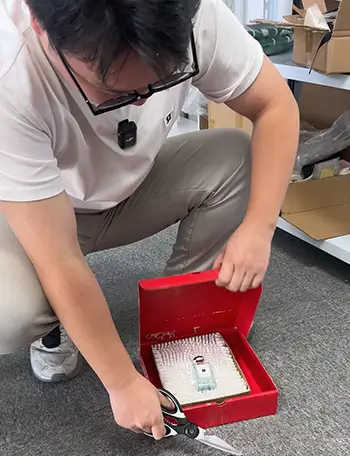
3. Inspect before shipping from China
Always inspect your goods in China, regardless of order size. If defects exceed the acceptable level, you can request rework or compensation based on the quality terms agreed in the contract.
How to identify a reliable supplier?
Initial screening checklist
- Top-ranked suppliers on Alibaba are ads, not quality rankings.
- Prioritize suppliers with a long operating history, ideally 5+ years.
- Choose suppliers located in industrial clusters, where pricing is usually more competitive.
- Check supplier profiles, product certificates, and reviews — but use them as references only, not decision-making criteria.
Communicate more and test with small orders
Compare and communicate with multiple suppliers, then place a small test order with the best option to see whether they can meet your requirements.
- Always keep 1–2 backup suppliers.
During this process, evaluate the supplier carefully on the following points:
Product expertise
Do they truly understand your product and requirements?
Communication efficiency and attitude
Do they respond in a timely manner? Are their answers addressing your actual questions, rather than giving generic “yes, OK” replies?
Do they take responsibility when things go wrong?
In practice, suppliers handle issues very differently when problems come up.
For example, when logistics are arranged by the supplier, a responsible one will proactively communicate and help resolve delays or damage. If you’re immediately asked to deal with the logistics company yourself, it’s a sign to reconsider the partnership and switch to your backup suppliers.
Suppliers who take responsibility can save you a lot in the long run.
Read more: How to Find Good Suppliers on Alibaba?
In short, Alibaba is a legitimate and generally secure B2B platform. Most negative reviews you see online are tied to specific scenarios, not fundamental platform security problems, and shouldn’t be a source of unnecessary worry.
Honestly, finding a reliable supplier is a process of constant comparison and small test orders — there’s no shortcut.
Even experienced buyers run into issues with supplier management, quality consistency, lead times, or customization flexibility — not to mention first-time buyers on Alibaba.
This is why many buyers work with China sourcing companies for supplier selection, production follow-up, and overall risk management.
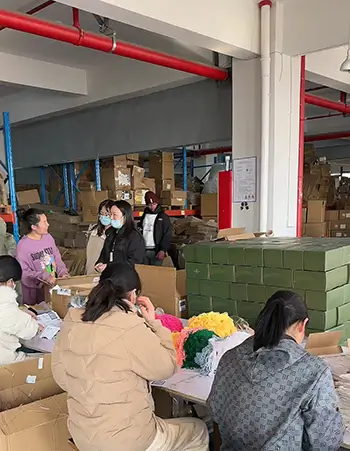
At JingSourcing, we don’t just source directly from factories with transparent pricing. We help reduce China sourcing risks and take responsibility across the entire process — from selecting suppliers and following up on production to coordinating multiple factories, inspection & shipping. When issues arise, we step in to resolve them properly.
Feel free to chat with us if you need support with China sourcing.
Thank you for the detailed info.
Very informative
Great