How Mattresses Make 10x Margins: Inside the Supply Chain
Sleep has become one of the biggest consumer categories lately, from pillows and duvets to even a fan blowing onto the bed to stay cool during sweaty nights. Among these products, one of our U.S. client was looking into the highest-ticket, highest-margin——mattresses.
He scrolled through many viral videos from China furniture factories, from compressed foam beds to “Hästens-style” hand-tufted mattresses, and wondered how much of it was real versus just marketing hype.
So today, we’re diving into the supply chain behind it.
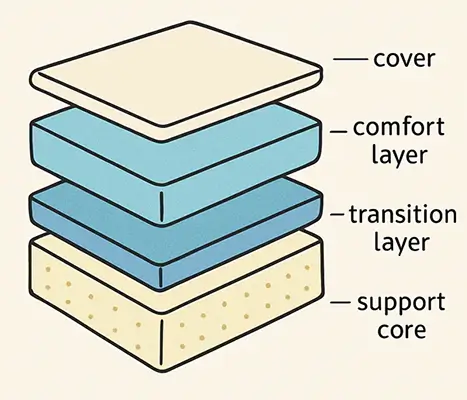
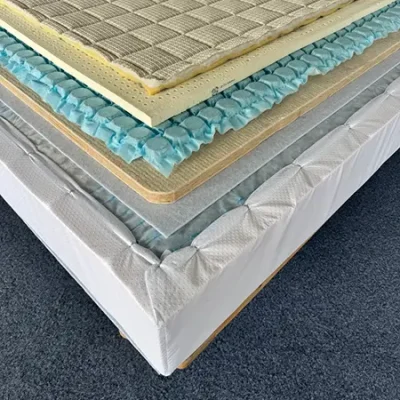
Let’s start with the mainstream mattress categories. From a supply chain perspective, it’s just layers stacked like a multi-layer cake. The core technology isn’t that high-end. Following the production order: fabric cover → comfort layer → support core.
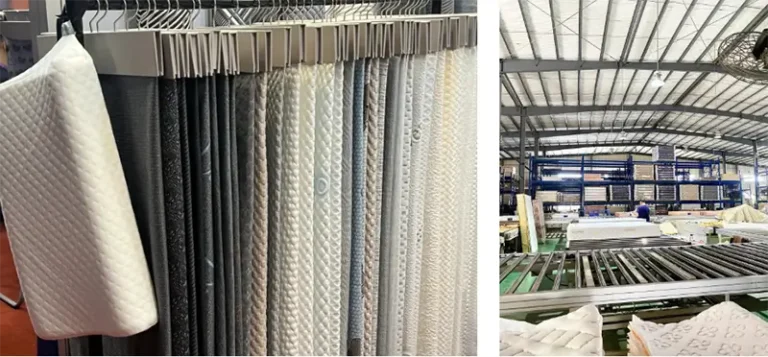
1. Fabric layer — the “skin”
This is the first thing the body touches. Brands choose fabrics based on the selling points they want to highlight:
Durability: High-tenacity polyester, nylon blends, or reinforced woven fabrics
2. Comfort layer — floating on top or sinking into clouds?
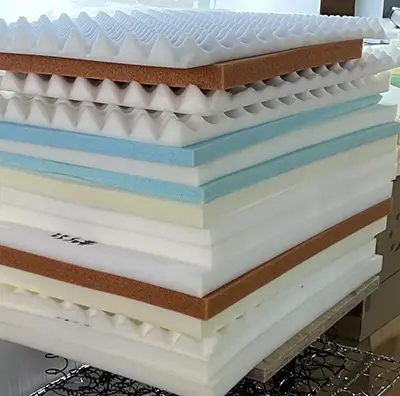
Common materials are latex and foam, often in combination.
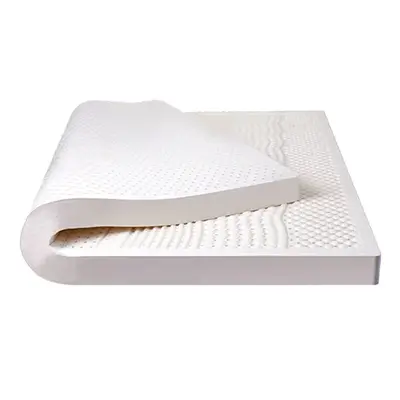
Latex offers great elasticity and support with a bouncy, responsive feel.
Foam feel depends on density (kg/m³) and thickness. Memory foam, for example, has a slow-response, “sinking-in” body-hugging feel. Regular foam tends to trap heat. To improve cooling, some foams are perforated for airflow, or infused with graphite, PCM, or topped with a cooling gel layer to reduce heat buildup.
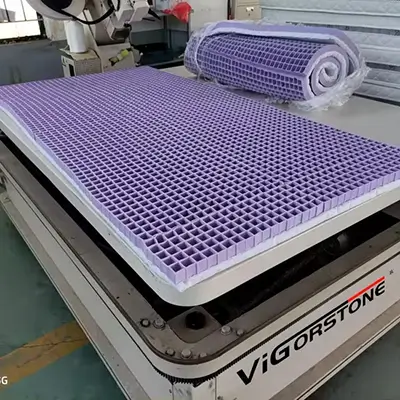
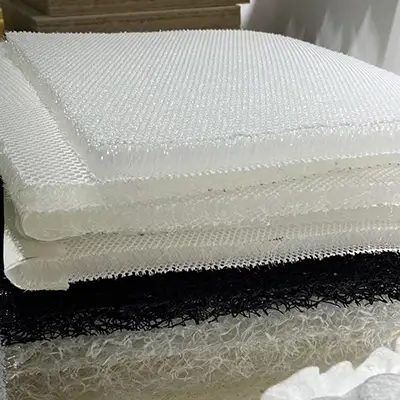
Other functional materials like TPE and 3D fiber offer good breathability and support.
Latex
Foam
TPE
3D fiber
3. Support core
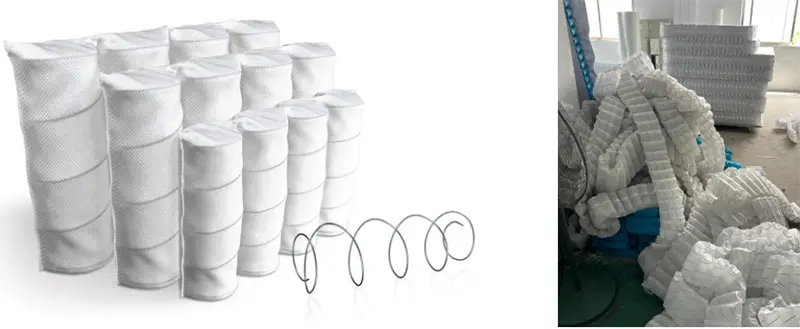
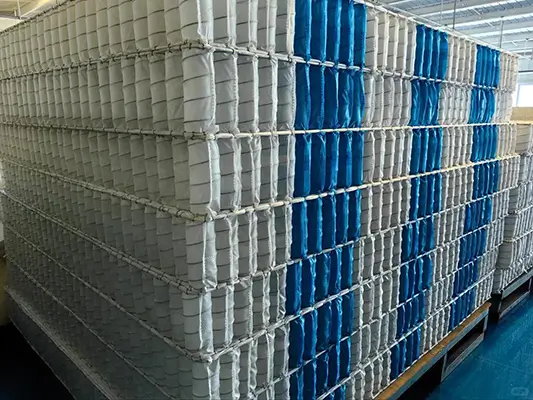
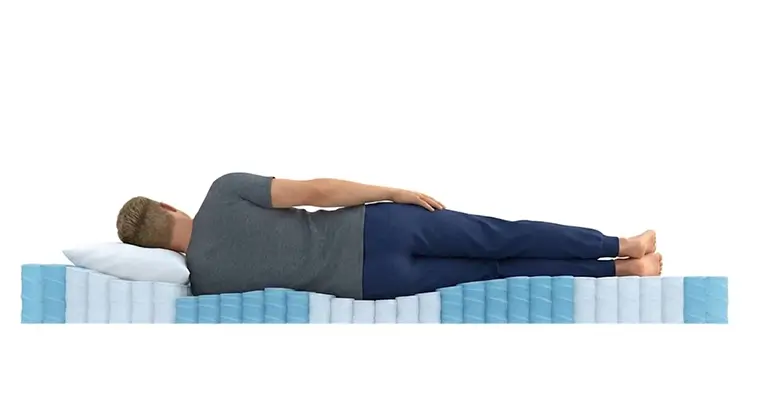
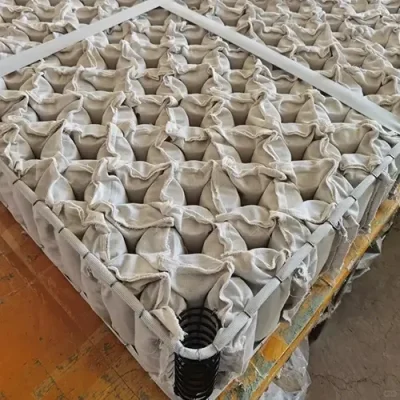
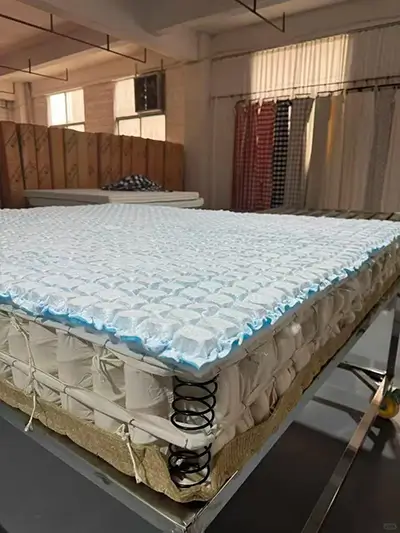
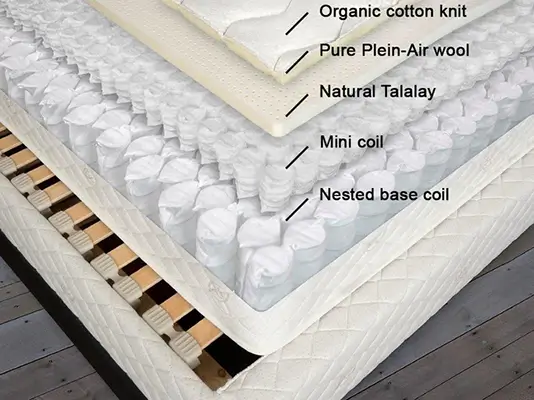
Most modern mattresses use springs in the support core, with pocket springs now the industry standard. Each spring is individually wrapped in a fabric pocket, which reduces motion transfer and enables zoned support. Some designs also add smaller “mini coils” in the comfort layer for extra contouring.
Support strength mainly depends on coil turns and wire gauge. For example, a thinner 1.8 mm gauge with more coils feels softer, while thicker gauges feel firmer and more supportive.
Zoned support is usually a 3-zone (head, lumbar, legs). Beyond 5 zones, the difference becomes less noticeable and is often more of a marketing distinction.
4. Edge guard
Common edge support include:
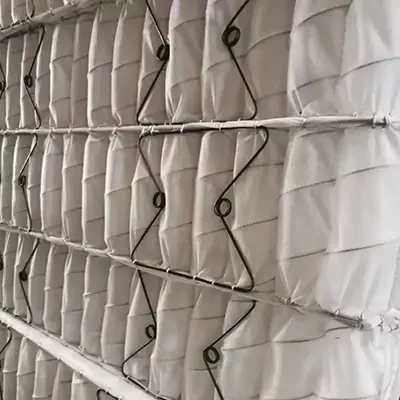
M-wire edge guard: fixed to the edge frame on the mattress sides; over time, under heavy weight and friction, the edge can loosen.
High-density foam edge: similar support strength to M-wire, but higher cost, softer, and more comfortable to sit on.
Coil edge: uses thicker-gauge springs, common in handcrafted mattresses, often combined with side-pull and hand-stitched edge techniques.
M-wire
High-density foam edge
Coil edge
Watch a Multi-Layer Mattress Come to Life
Next, let’s follow our sourcing agent Joe to see how a mattress is actually made in the factory.
The US client was looking for mattresses similar to Serta, so we came to an OEM factory that works with many big brands. They produce roll-pack mattresses, hotel mattresses, and regular home-use ones.
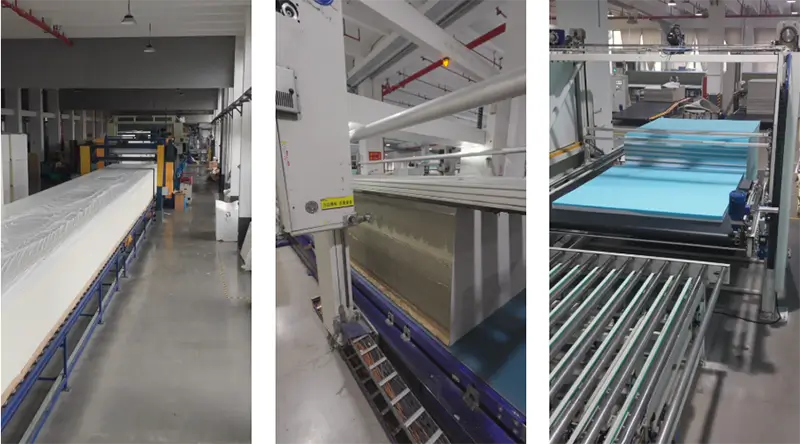
The first step looks a bit like baking bread, foam expansion and curing, followed by CNC cutting for precise shaping. Next, foams with different firmness levels are glued together to form the comfort layer.
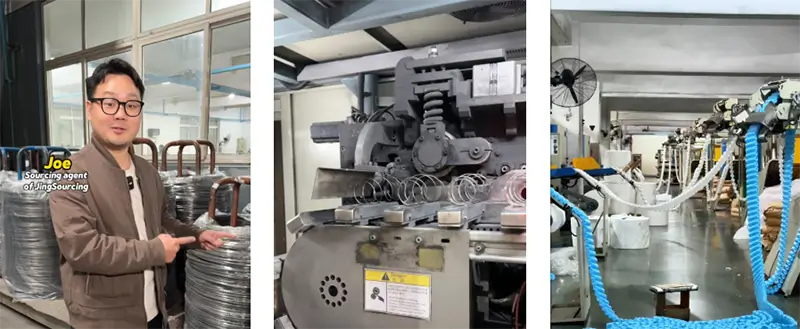
The factory owner told us that springs are one of the biggest cost factors in a mattress. So they produce their own steel wire in-house. For higher-grade steel wire, the material cost usually stays under $60.
There are over 10 spring machines in the factory, and they’ve supplied springs to some of China’s largest mattress suppliers, such as Sleemon and Mousse.
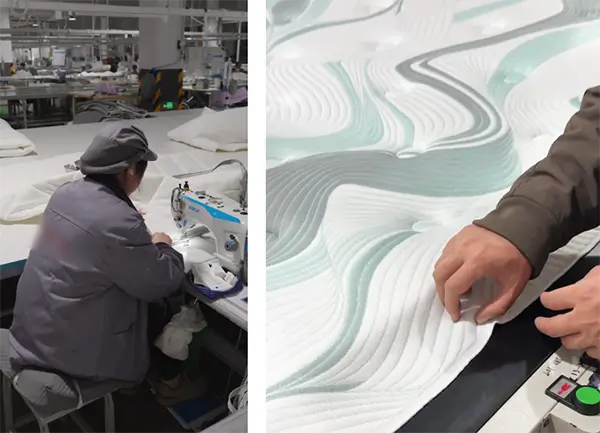
Surface patterns can be customized during the fabric cover stage.
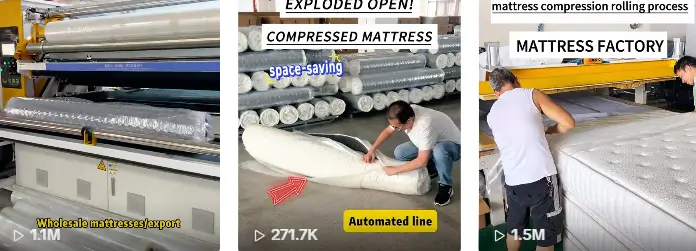
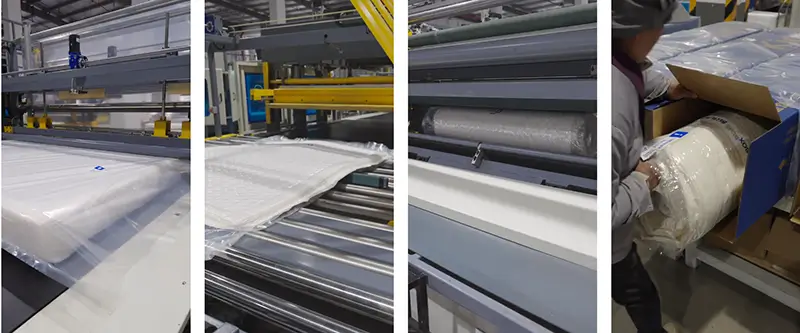
Finally, all layers are assembled. A mattress that’s over 15 centimeters thick can be compressed into a thin roll, vacuum-packed, and boxed. Most of their orders come from this roll-pack type, which can reduce shipping costs by up to 60%.
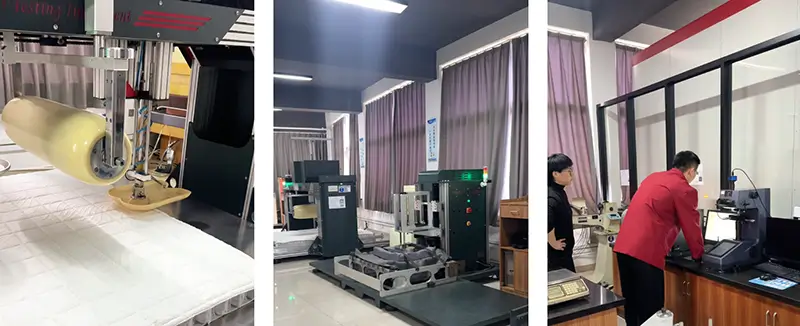
To ensure quality, they built a testing center with an investment of over $735K, and all raw materials must pass standards that are higher than the market average before production.
China’s Mattress Supply Chain
The mattress supply chain is more about coordinating different components. Most mattress factories don’t produce raw materials themselves. They source everything externally and focus on integrating the final product.
Their main strength is combining and tuning different materials to create different sleeping experiences. For example, hotel mattresses are usually designed to feel softer and more comfortable.
Zooming out, the supply chain spans several industries—raw materials, chemicals, textiles, foam production, and metal spring manufacturing. In China, these industries are highly concentrated in a few key clusters, especially Guangdong, Zhejiang, and Jiangsu.
Among them, Foshan in Guangdong is one of the main mattress manufacturing hubs and a major base for OEM production. Many of the “mattress factory videos” our U.S. client saw on social media actually come from these clusters.
How to Create Premium Pricing Through Differentiation
The EXW price of a basic foam-and-spring mattress is around $100. But in retail, brands often sell them several times, sometimes even over ten times that price. The difference comes from how they repackage materials, structure, features, and brand positioning.
We’ve rounded up several typical mattress brands to show how they make their products stand out.
Logistics & Ecommerce efficiency
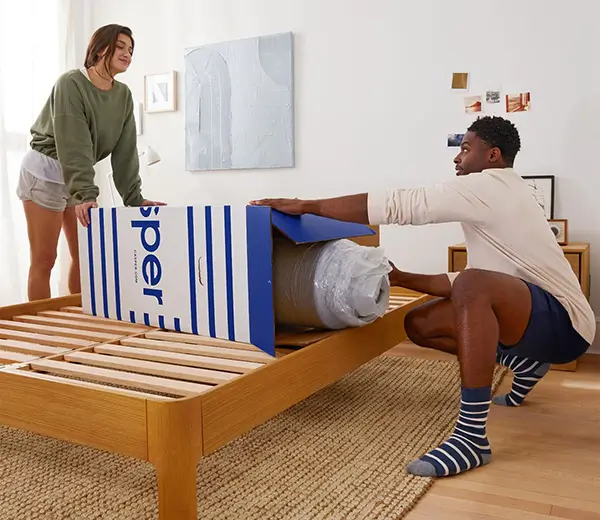
Brands like Casper, Nectar, and early Tuft & Needle built their model around pure foam mattresses. These mattresses rely on foam for both support and comfort layers, with some using a single layer of pocket springs.
Most of these can be roll-packed without damaging internal layers, which cuts logistics costs by up to around 60%. That made them especially well suited for ecommerce, while also delivering a highly satisfying unboxing experience.
Natural & Organic premium
Brands like Avocado emphasize natural materials and organic certification. They use latex as the main comfort layer and combine it with pocket coil support in a hybrid structure. So the feel is usually firmer than foam. The premium comes from materials and positioning — organic, non-toxic, and “health-focused” branding.
Mainstream structure:foam + pocket coil hybrid
Foam and pocket coil hybrid is now one of the most common mattress structures on the market. It combines foam for comfort and pressure relief with coils for support and breathability.
Most mainstream brands use this structure across different product lines. The real premium gap usually comes from how they mix foam densities and how they position specific sleep feels.
Make material identity branding
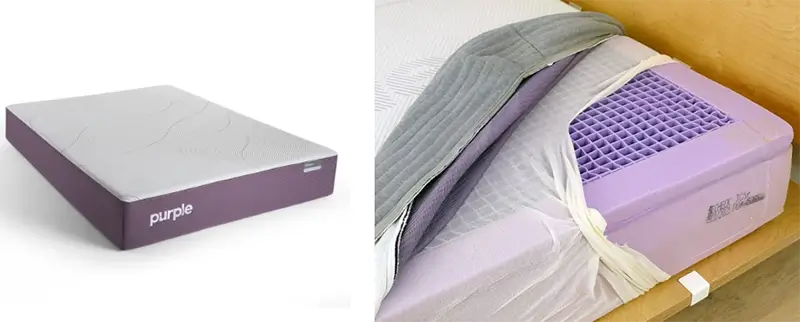
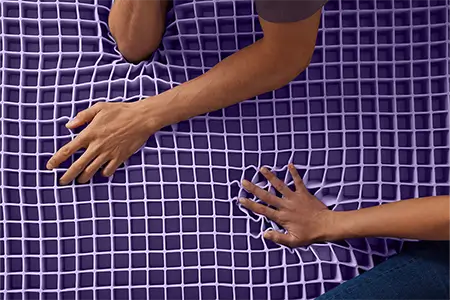
One of the most interesting cases is Purple. Its key feature is the purple grid, which is made from a hyper-elastic polymer, a TPE-like material. It sits between the spring support layer and the foam comfort layer as a functional transition layer.
When pressure is applied, it collapses locally at the contact points, but the overall structure does not bottom out easily. The biggest advantage is its open grid design, which allows high breathability and strong airflow.
The purple grid is also the core visual symbol. It turns a material concept directly into brand identity.
Premium hybrid upgrade
Higher-end hybrid mattresses go further with coil-on-coil construction. This thin micro‑coil layer usually sits in the comfort or transition zone to improve body contouring, pressure relief, and airflow, while also boosting responsiveness.
Many of these designs also use zoned coils, softer under the shoulders and firmer under the hips and lower back, to tailor support by body zone.
But this increases material cost and makes the mattress difficult to compress into a small box. As a result, it often ships flat, which leads to higher logistics and transportation costs.
Personalization funnel
Helix Sleep is a strong example of how complex hybrid mattresses are turned into a personalization advantage. Instead of asking customers to choose from a wide range of models, they simplify the decision through a sleep quiz funnel.
Users answer a series of questions, including sleep position, body weight, firmness preference, whether they sleep hot, or whether they have back or pressure issues.
Based on that input, the system automatically recommends a specific mattress model. It reduces decision fatigue and improves conversion by turning product complexity into a simple one-to-one match.
Rapidly Growing Premium Handmade Mattresses
At the very top end of the mattress market are handmade luxury brands such as Hästens, Vispring, and Treca. Prices can reach tens of thousands of dollars, even six figures.
In most cases, consumers are not just paying for sleep quality. They are also paying for craftsmanship, natural materials, and status.
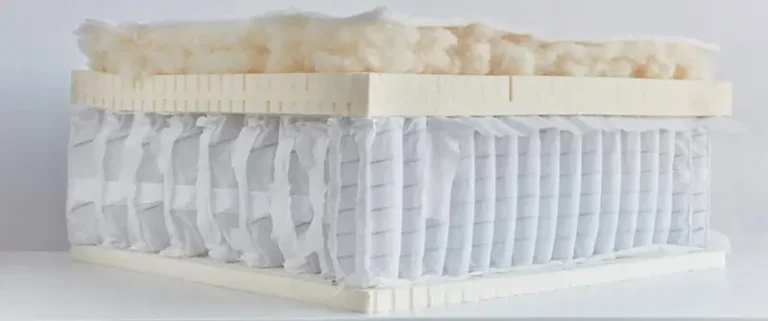
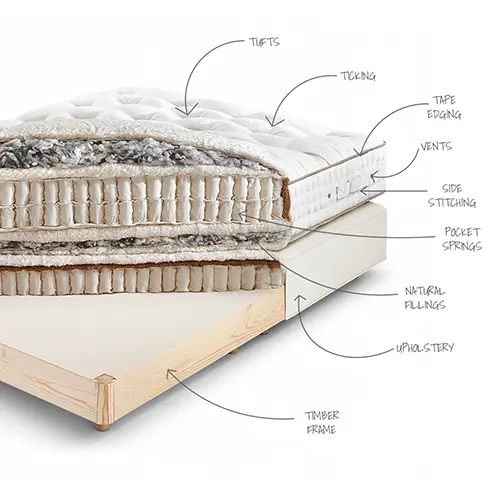
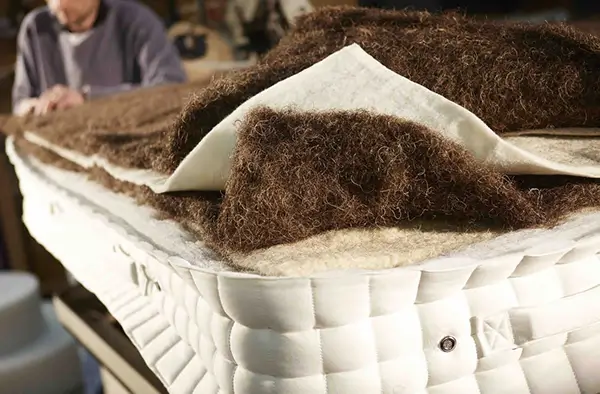
The biggest difference between handmade and industrial mattresses lies in both materials and technique. Handmade mattresses use natural fillings such as horsehair, wool blends, and cotton.
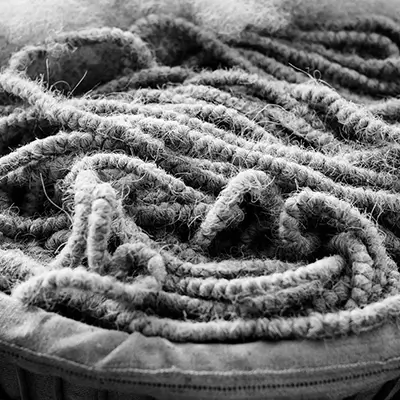
Horsehair is one of the most important materials. After cleaning, aligning, and curling through multiple processes, it forms an elastic structure that behaves like a natural spring layer, adding both support and breathability.
For a standard king-size mattress, the top comfort layer usually needs at least about 5 kilograms of horsehair, while high-end versions can exceed 20 kilograms. Wool is also measured by weight. Effective wool layers are typically 500 grams or more.
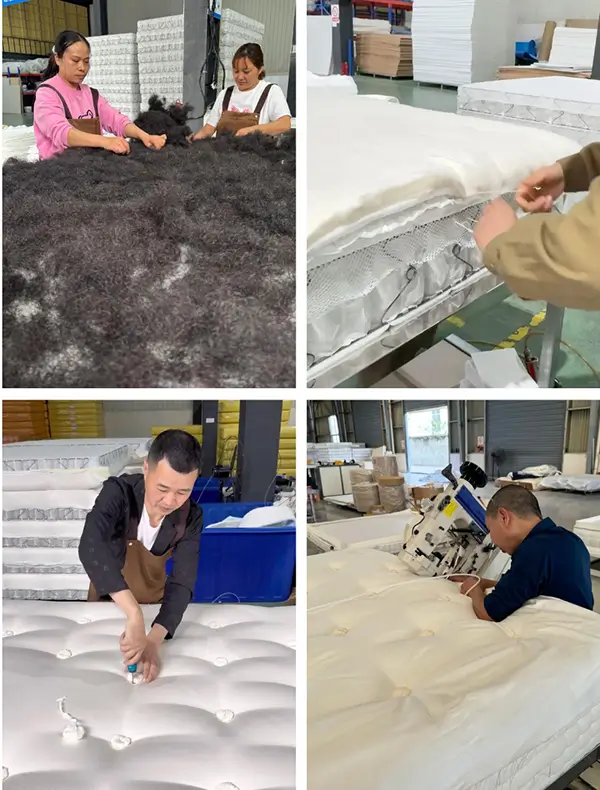
Speaking of construction, industrial mattresses typically rely on glue bonding and machine sealing. In contrast, handmade mattresses are built layer by layer, with materials manually placed and assembled. usually finished with hand-tufting, where long cords run from top to bottom, tying all the layers together.
From a supply chain perspective, this kind of small-batch, highly customized manufacturing model is already well established. Especially in China’s Foshan mattress manufacturing cluster, most of this capacity today serves mid-to-high-end domestic Chinese brands, as well as OEM production for some European labels.
Subscribe
Subscribe to us to see more China sourcing stories like this one, plus product ideas, case studies, insights.
Wholesale and Customize
Have great product ideas but not sure where to start? Or maybe you’re looking to buy products in stock, add your logo, customize packaging, or place a small order for quick testing?
Share your ideas. Get affordable, and effective sourcing solutions!