Guangzhou and Foshan are home to many specialized markets and manufacturing industries, attracting wholesalers, retailers, and buyers furnishing their own homes, restaurants, or offices.
This post answers the most common questions about Guangzhou and Foshan: how far apart they are, transport options, where to go for different products, where to stay, how many days to plan, and whether you need a local sourcing agent.
Is Foshan in Guangzhou?
No. Foshan and Guangzhou are two separate neighboring cities in Guangdong Province.
Many overseas buyers attending the Canton Fair also make a trip to Foshan. They go there to visit wholesale markets and check factories.
Some buy furniture and building materials in bulk to resell locally or in their own stores, while others source everything they need to renovate their own homes or villas. Including shipping, the total cost can be 30–50% lower than buying the same products locally.
How to get from Guangzhou to Foshan?
The most common ways to travel between Guangzhou and Foshan are by taxi or ride-hailing, high-speed train, and metro. The best option depends on where you are in Guangzhou and which part of Foshan you’re heading to.
By car
Traveling by car is convenient and flexible, especially if you have luggage or plan to visit markets and factories. It usually takes around 45–60 minutes to get from Guangzhou to the furniture markets in Foshan.
DiDi is China’s version of Uber. You can download DiDi app or the DiDi mini program in Alipay or WeChat. You can see the estimated fare and use message translation. For example, a ride from Guangzhou South Railway Station (广州南站) to Shunde (顺德), 20–30 km, usually costs around RMB 100 ($15).
Payment tip
Link an international Visa or Mastercard to Alipay or WeChat so you can easily pay for rides and other daily expenses. Cross-city trips may include highway tolls, which should be added to and paid through the app.
Regular taxis are also available but are usually slightly more expensive. Make sure the driver uses the meter, and note that highway tolls may be charged separately. Ask the driver for a receipt before getting out.
By train
Trains to Foshan leave from several Guangzhou stations. Just choose a nearby one with a convenient departure time.
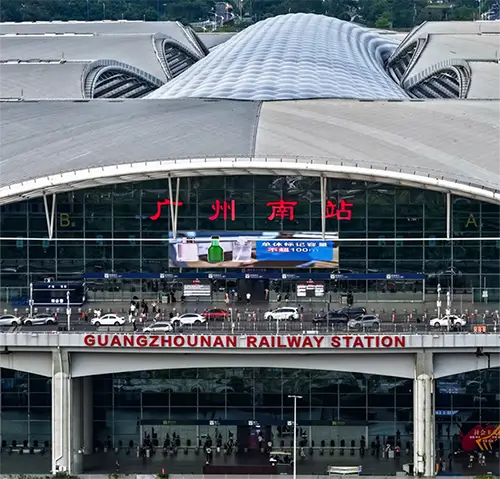
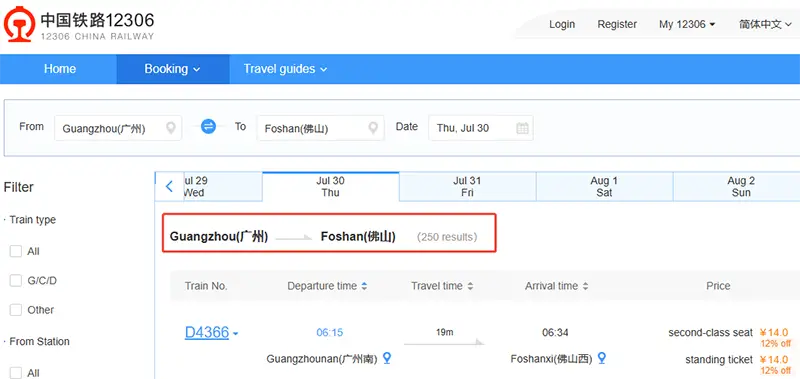
Guangzhou South Railway Station (广州南站) has the most trains to Foshan, and they all go to Foshan West (佛山西站).
The trip takes about 20 minutes, and second-class tickets cost around RMB 20 ($3).
Arrive at least an hour early, as the station is large and you’ll need time for security and boarding.
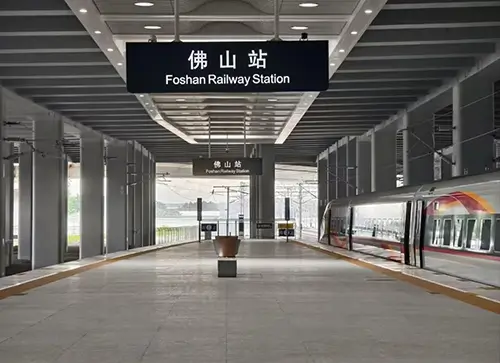
Other Guangzhou stations also offer trains to Foshan. Most arrive at Foshan Railway Station (佛山站), while a few stop at Foshan West (佛山西站).
Guangzhou Railway Station (广州站), Guangzhou Baiyun (广州白云), or Guangzhou East (广州东站) takes 20–30 minutes to Foshan Railway Station (佛山站).
Second-class tickets cost around RMB 20–30 ($3-5).
Xintang (新塘站), Guangzhou North (广州北站), and Zengcheng (增城站) also have a few trains, but the journey takes longer, and fares are slightly higher.
Check the latest schedules on 12306 China Railway before you travel.
After arriving at Foshan West or Foshan Railway Station, you can take a DiDi to the furniture market or a factory.
By subway
The subway is the cheapest option. Guangfo Line (广佛线) connects Guangzhou Lijiao Station (沥滘站) and Foshan Xincheng East Station (新城东站), with 25 stops in total. The full journey takes about one hour and costs around RMB 10 ($1.5), with metro trains running every 6–8 minutes.
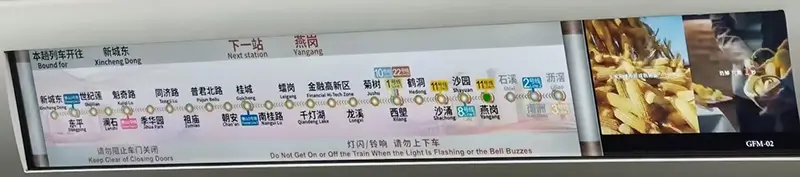
You can use Alipay or WeChat Pay to scan and enter the subway. In Alipay, switch the city to Guangzhou or Foshan in the “Transport” section to get your subway QR code.
Foshan Metro Line 2 (佛山地铁2号线) provides a direct connection to Guangzhou South Railway Station (广州南站), and Guangzhou Metro Line 7 (广州地铁7号线) also serves this station.
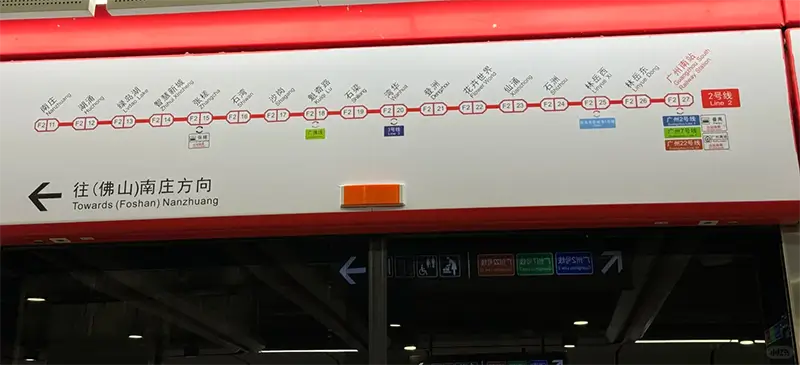
Keep in mind that the subway usually stops running around 11 PM, so plan your return trip in advance.
For navigation, Apple Maps works well on iPhones. Android users can download Amap Global,the English version of Gaode Map (高德地图).
Where to find the products you need in Foshan?
Foshan is famous for furniture, building materials, and home improvement products, with different areas specializing in different product types.
Looking for furniture? Go to Lecong and Longjiang
Lecong in Shunde has the world’s largest furniture market cluster. Its furniture malls stretch for over five kilometers and cover an area roughly equal to 420 football fields. It’s easy to compare styles, prices, and quality in one place.
Once you find suitable products in the market, you can visit factories in nearby Longjiang Town (龙江镇), where many furniture factories are based.
Before going, check out Top 7 Foshan Furniture Markets.
For mattresses, head to Jiujiang (九江镇) in Nanhai (南海区)
Known as China’s leading mattress manufacturing hub, Jiujiang has a well-developed supply chain, with spring, foam, fabric, and other suppliers all within about a 30-minute drive.
For ceramics and sanitary ware, head to Chancheng
Foshan’s ceramics industry is mainly concentrated in Nanzhuang (南庄镇) and Shiwan (石湾镇)in Chancheng District (禅城区). The area is home to tiles, sintered stone, and ceramic sanitary ware brands, along with their headquarters, showrooms, and specialist markets.
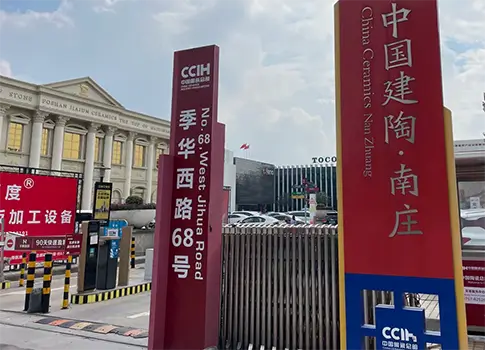
Major ceramic markets and trade centers include China Ceramics City (中国陶瓷城), Huaxia Ceramics Expo City (华夏陶瓷博览城), and China Ceramics Industry Headquarter (中国陶瓷产业总部基地).
For aluminum doors and windows, go to Dali
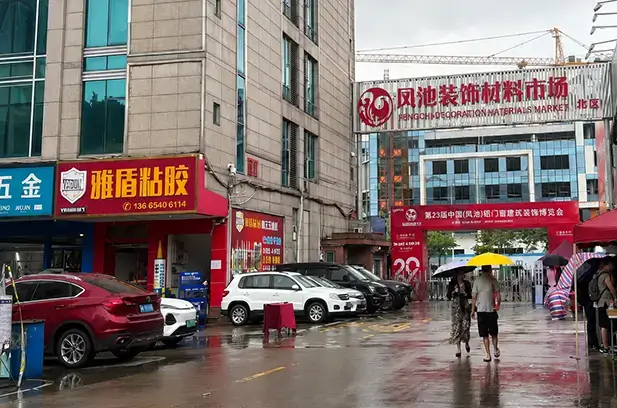
Dali Town (大沥镇) in Nanhai District (南海区) is China’s largest aluminum profile manufacturing cluster, making it a good place to source profiles for architectural doors and windows, including thermal-break aluminum profiles. The Phoenix Decoration Materials (凤池装饰材料市场) is the major market.
If wholesaling building materials or door and window products in bulk, Dali is one of the key places to visit in Foshan.
For home appliances, Shunde is the key area
Shunde is the heart of Foshan’s home appliance industry and one of China’s most established appliance manufacturing bases.
For large home appliances or a mature appliance supply chain, focus on Beijiao (北滘镇) and Ronggui (容桂街道). These areas are home to major appliance brands such as Midea, along with many factories and suppliers of hardware, injection-molded parts, motors, and other components.
How many days do you need in Foshan?
For wholesalers
One-stop sourcing for multiple categories of building materials and furniture usually takes about one week. You can first visit furniture, ceramic, or sanitary ware showrooms to compare styles and designs, and then arrange factory visits for further inspection.
For a specific product category, such as flooring or sanitary ware, allow 2–3 days to visit markets, select products, and compare quality and prices. If you also plan to visit factories, it is better to schedule 4–5 days so the trip does not feel too rushed.
For individual home renovation buyers
If you have already browsed furniture websites, chosen the styles you like, and prepared a shopping list, 2–3 days is usually enough to visit furniture markets in Shunde, select products, make comparisons, and confirm fabrics, colors, and sizes.
If you are buying everything needed to furnish an apartment, including cabinets, sanitary ware, tiles, wall panels, and lighting, you will usually need about one week.
In case your shopping list and product requirements are not yet fully defined, it is better to allow more time. Furniture and building materials come in a wide range of styles, materials, sizes, and combinations, so comparing and confirming everything on site often takes longer.
Where should you stay: Guangzhou or Foshan?
Stay in Guangzhou
Foshan has many furniture, ceramic, sanitary ware, and building material markets, but the factories supplying these products are not necessarily all located in Foshan. Some are based in nearby cities. For example, many of the lighting factories are concentrated in Guzhen, Zhongshan.
If you need to visit factories in several cities, staying in Guangzhou is usually more convenient.
Some of our clients visiting factories in Foshan, Shenzhen, and Dongguan chose to stay in Guangzhou, while we arranged transportation for their daily factory visits.
Many individual buyers also choose to stay in Guangzhou and take a taxi to Foshan each day. This way, they can source furniture and building materials in Foshan, as well as shop for clothing, shoes, bags, wigs, and other products in Guangzhou.
Stay in Foshan
Accommodation in Foshan is generally cheaper than in Guangzhou. For reference, outside peak periods, a good-value five-star hotel in Guangzhou may cost around $500 for a one-week stay. With the same budget, you can often get a better hotel in Foshan.
Hotel rates are usually higher during peak periods such as the summer holidays and the Canton Fair.
Do you need a sourcing agent in Foshan?
For wholesalers
If this is your first time visiting Foshan for wholesale sourcing or factory visits, working with a reliable sourcing agent who truly understands the local markets and supply chain can make the process much easier.
Based on your product requirements, they can identify suitable markets and factories, arrange appointments in advance, plan your daily itinerary, and help you discuss product specifications, customization details, and pricing with suppliers on site.
They can also follow up on production, quality inspections, goods consolidation, and shipping. A translator usually only helps with the language barrier and may not know the best factory sources or have experience negotiating and coordinating with suppliers.
For individual buyers
Individuals buying renovation products for a villa, restaurant, or guesthouse sometimes hire a local assistant or translator as a guide. Be sure to confirm how they charge in advance. Others visit Foshan’s markets independently and use their phones and translation apps to communicate and negotiate prices with vendors.
You will also need a freight forwarder to collect goods from different vendors, consolidate them, and arrange delivery to Guangzhou port or Shenzhen port.
There are many professional freight forwarders in Guangzhou and Foshan with experience handling international shipments. For projects involving a full range of products for villa renovation, most buyers choose full-container sea freight.
Final thoughts
Hope this guide makes planning your first sourcing trip to Foshan easier. If you still have questions or need sourcing help, feel free to leave a comment or contact us.
We’re JingSourcing, a China sourcing company with an established local sourcing network across Foshan and Guangzhou. We coordinate market and factory visits, transportation, supplier management, quality control, and shipping—all through one team.