When sourcing from China, you’ll often see suppliers offer OBM, OEM, and ODM. But most guides explain OBM from the manufacturer’s perspective. Here, we’ll focus on how OBM actually works for buyers in real sourcing.
What is OBM (Original Brand Manufacturer)
In the OBM model, manufacturers already have their own brands—you just pick their products and sell them. In simple terms, you’re distributing the manufacturer’s branded products.
You don’t need to customize or develop products—the core structure and functions are already built by the factory.
These products usually come with the manufacturer’s own logo and packaging, and have already been sold in some markets with an existing customer base. This is different from white label products, where anyone can easily add their own logo.
The reality of OBM suppliers in China
Most factories still focus on OEM and ODM, while more and more are trying to build their own OBM brands. So it’s common to see suppliers list ODM, OEM, and OBM.
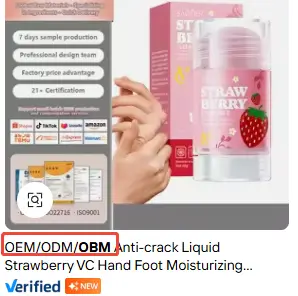
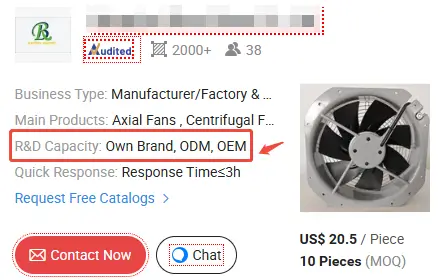
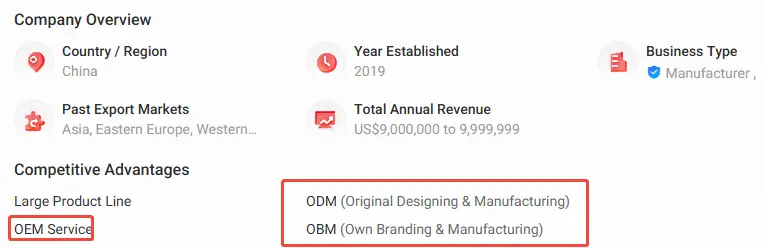
Many suppliers list OBM, but that doesn’t necessarily mean they have a fully developed brand.
Most OBM suppliers are still at an early stage. Well-known, top-tier brands like DJI (drones) or Dreame (robot vacuums) are few in number. Some are doing well in niche markets and are still growing.
Factories that have truly built strong brands usually have:
- Larger scale and international certifications like ISO, BSCI, etc.
- Complete product R&D team, technical patents
- A team focused on branding and marketing
How buyers typically work with OBM suppliers
When a manufacturer’s products are strong in both design and quality, some buyers choose to distribute its branded products exclusively in a target market.
Buyers who choose OBM suppliers are usually not beginners—they already have sales channels, resources, and the ability to sell.
For example, one of our Middle Eastern clients was looking for factories strong in outdoor leisure products.
Zhejiang Sunshine Leisure Products Co., Ltd. already has a certain level of global recognition, with registered brands like SUNLN and SUNSHINE in the EU and US markets.
However, these brands have not yet entered some Middle Eastern markets. Our client aimed to secure exclusive rights to distribute the brand in that market.
In most cases, buyers will negotiate an annual purchase volume or order value with the factory and sign an exclusive distribution contract. Once the deal is in place, the factory won’t sell to other buyers in that market.
In simple terms, you’re “locking in” that market. This is how most OBM partnerships typically work.
In addition, many Chinese factories have their own OBM brands that may sell well in China, but are barely known overseas, sometimes close to zero.
These “weaker” OBM products are popular among buyers, especially wholesalers and chain stores in developing markets focused on offline sales.
Their logic is simple: As long as the product fits their market, supply is stable, and the price works, they’re fine selling it with the supplier’s logo.
For example, many buyers at Yiwu wholesale markets simply pick from existing products and sell them through their own channels.
OEM vs ODM vs OBM, which path fits you
ODM as an approach to test products and markets
If you’re just starting a business and want your own brand, the easiest way is to put your logo on existing products and customized packaging. It’s low risk and quick to test.
OEM as a way to build product differentiation and branding
Once you have stable sales, budget, and a good understanding of your market, you can improve or create products based on specific customer needs to solve real problems.
This usually involves multiple rounds of sampling, testing, and revisions to validate the design and feasibility. It costs more and takes longer, but this is how you build real differentiation and a long-term brand.
 Read More:
 OBM as an option to expand product lines or markets
If you already have stable sales channels and come across strong branded products with potential in your market, you’ll likely reach out to the original manufacturer.
The first thing they’ll usually ask is: “Which market are you selling in?” If that market is already taken (under an exclusive deal), they won’t sell to you. If not, then you can move forward.
Wrapping up
We regularly share practical insights on China sourcing and manufacturing—from a buyer’s perspective.
At JingSourcing, we work closely with buyers to find the right suppliers, evaluate real capabilities, and make sourcing more predictable and less risky.
Chat with us anytime if you’re exploring OBM, OEM, or ODM options—we’re happy to help.