China Loofah Hubs: Factories, Prices & Customization
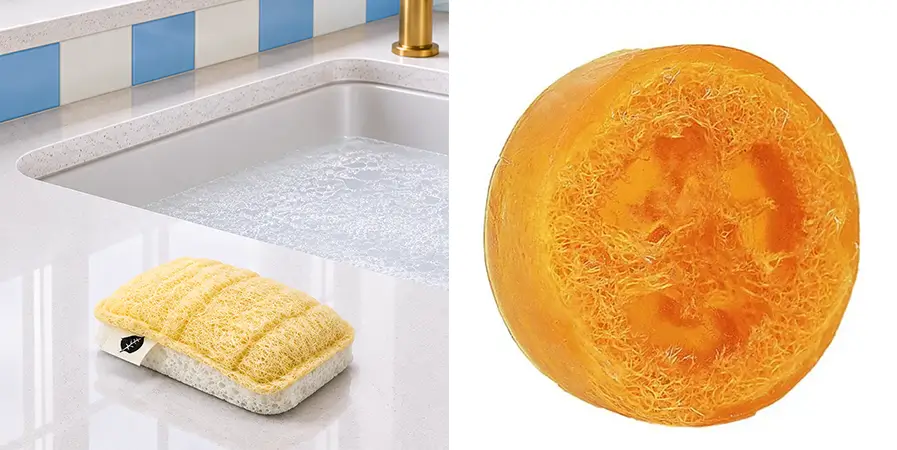
A kitchen sponge. An exfoliating soap bar. A hamster chew toy. Even a $600 lamp.
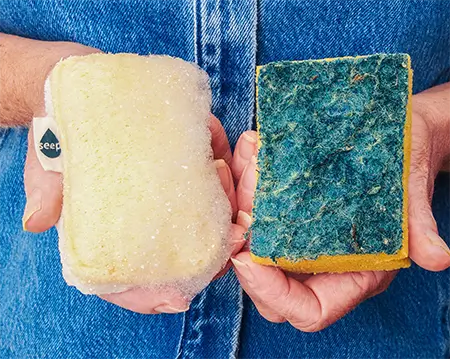
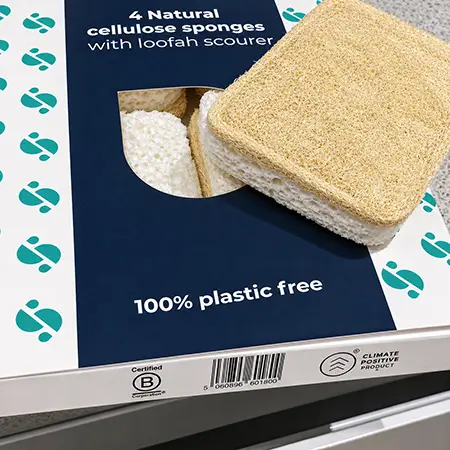
They all use the same natural material: loofah. In China, a whole dried loofah gourd costs just $1.40–$1.80 at the factory. But with different material combinations and designs, it can be turned into products that sell for much more. Take UK brand Seep, for example. It combines loofah with cellulose sponge to make a plastic-free kitchen sponge. A 12-pack sells for $37.50, with over 4 million sponges sold to date.
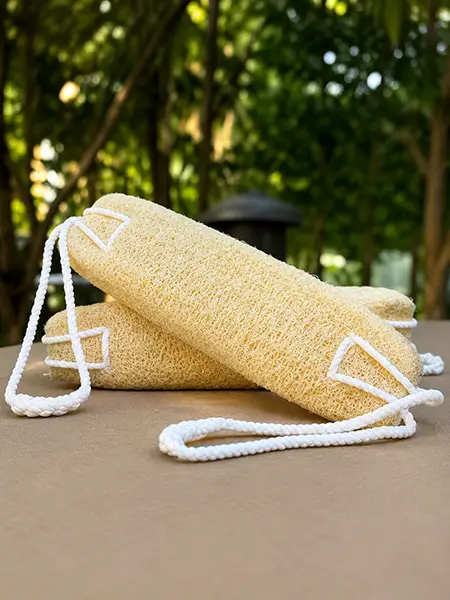
Over the years, we’ve also helped clients source various loofah products. One natural loofah bath sponge we sourced cost just $0.18 per piece, with an MOQ of 1,000 pieces. In this article, we’ll look at interesting loofah products on the market, how Seep worked with Chinese suppliers to develop its bestselling sponge, and where China’s main loofah-producing regions are. We’ll also explore what local factories can customize, along with real sourcing prices and MOQs.
New Loofah Product Ideas (Plus a China Sourcing Story)
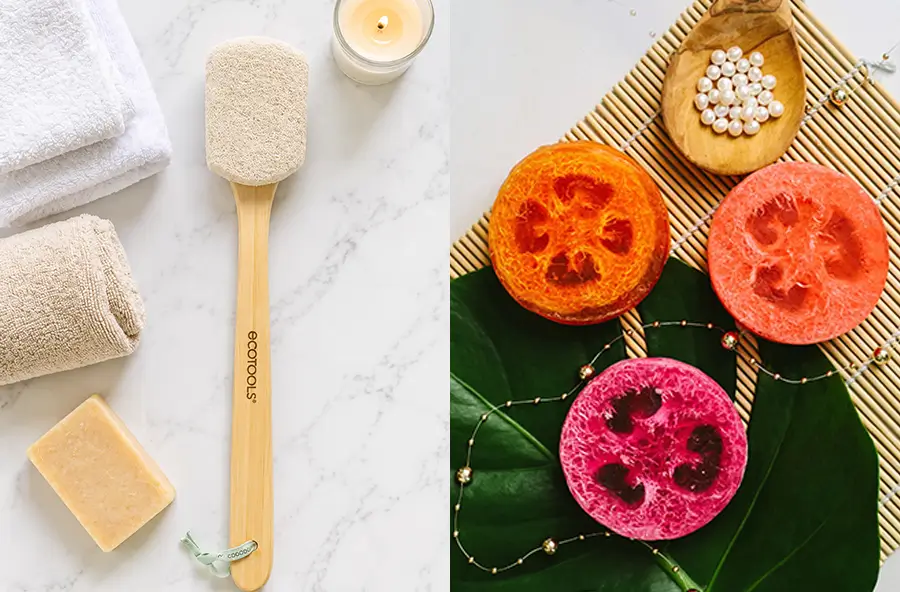
Loofah is no longer just for dishwashing and bathing. EcoTools sells a China-made loofah bath brush with a wooden handle, making it easier to reach the back and other hard-to-reach areas. It retails for around $6.98, with over 100 bought in a single day. Similar brushes can be sourced from China for about $1.50 each.
Naples Soap Company embeds loofah slices in glycerin soap, combining cleansing and exfoliation. Each 4 oz bar sells for $9.50, with different scents, colors, and gift sets.
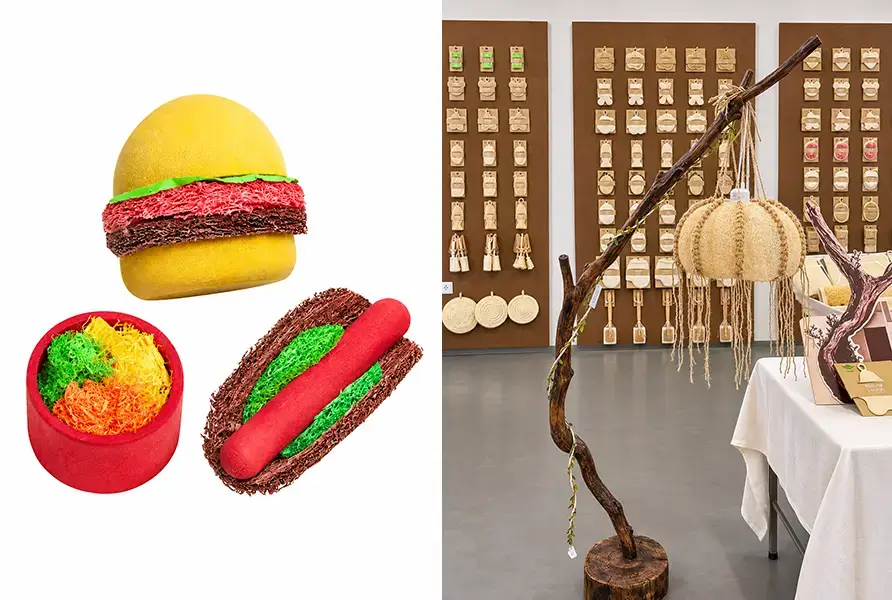
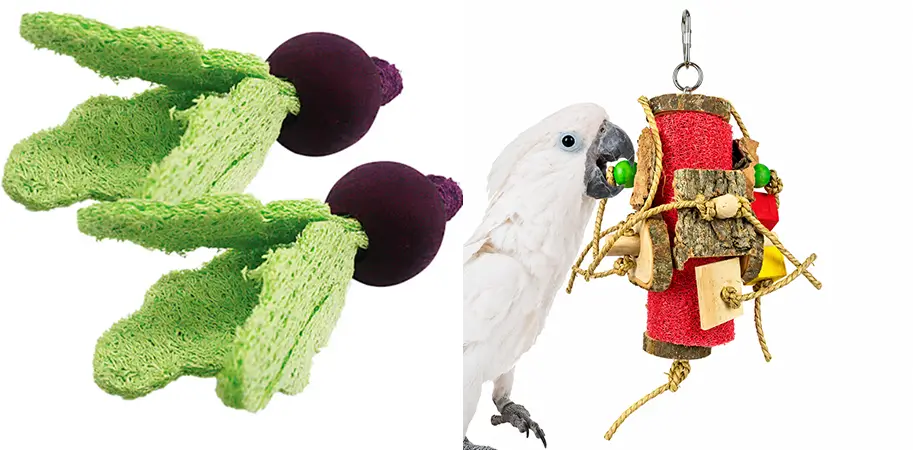
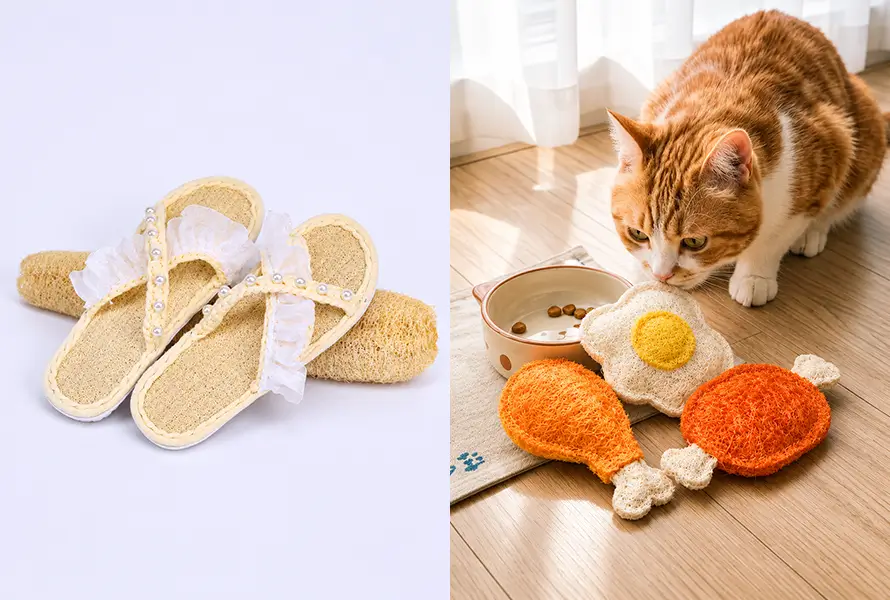
Petco sells loofah toys for hamsters, rabbits, and guinea pigs, dyed, cut, and hand-stitched into candy and vegetable shapes. Other brands combine loofah with wood, rattan, and natural rope, sometimes hiding treats inside to make foraging toys.
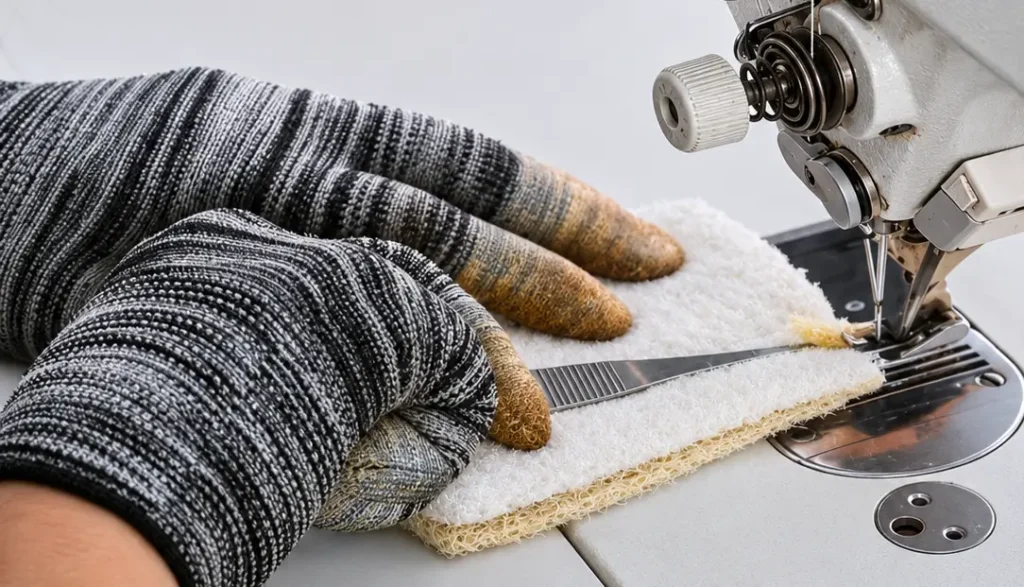
Five years ago, UK brand Seep worked with Chinese suppliers to develop a plastic-free kitchen sponge. It combines natural loofah for scrubbing with a wood-pulp cellulose sponge for absorbing water, with the two layers stitched together using cotton thread. It has sold over 4 million units to date.
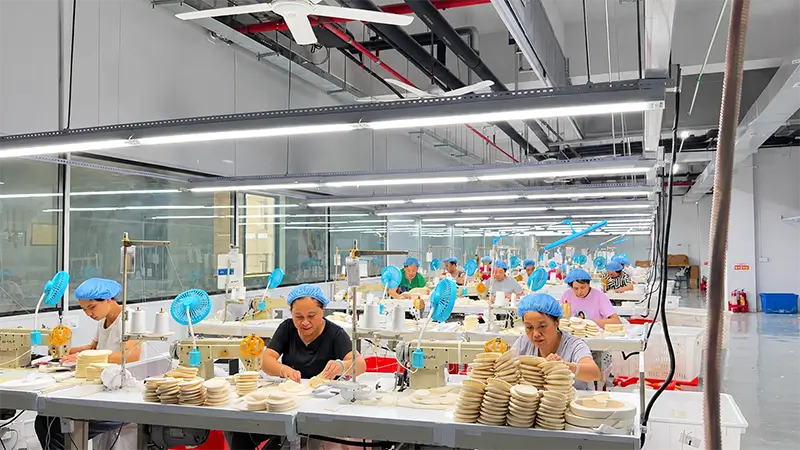
Finding a suitable factory in Europe wasn’t easy. Most local loofah manufacturers made conventional cleaning sponges, while Seep’s design required skilled workers to cut, align, and stitch each piece by hand. This made production costly, especially for a small initial order. The factories it contacted either wouldn’t take the order or lacked the necessary stitching skills.
Seep eventually found a factory through a Chinese sourcing agent. China offered both readily available loofah and established processing facilities, with more competitive stitching costs. The agent helped compare suppliers and coordinate production. Early on, some sponges came apart at the seams because single stitching wasn’t strong enough.
Glue would compromise compostability, so the sourcing agent coordinated with Seep and the factory to find a solution. After several rounds of discussion, they switched to double stitching. This made the sponge more durable, and customer returns and complaints eventually dropped to almost zero.
Seep’s story is just one example of what China’s loofah supply chain can do. So, where in China is loofah grown, and where are these products made?
Inside China’s two loofah hubs: Zhejiang and Henan
About 40% of the world’s exports of natural woven goods and loofah products come from China. Most of China’s loofah industry is concentrated in two provinces. Zhejiang has a stronger focus on processing and exporting finished loofah products, while Henan stands out for its loofah cultivation and product development.
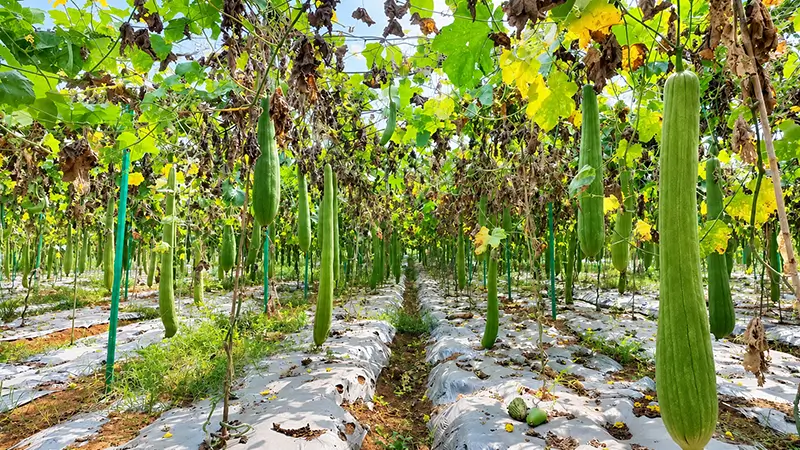
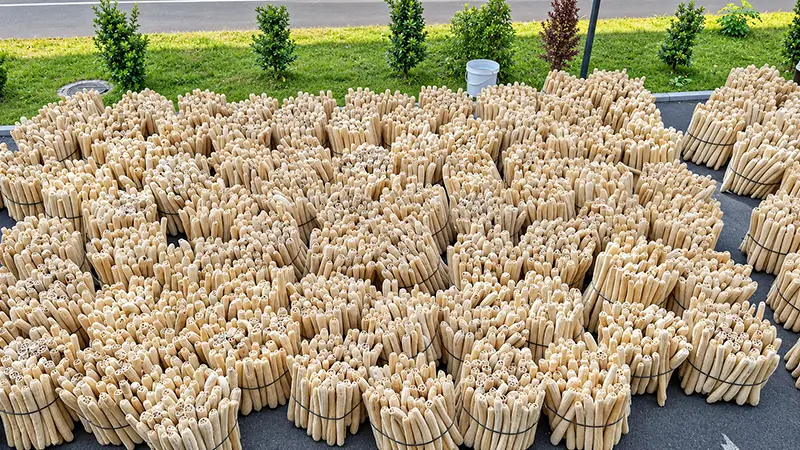
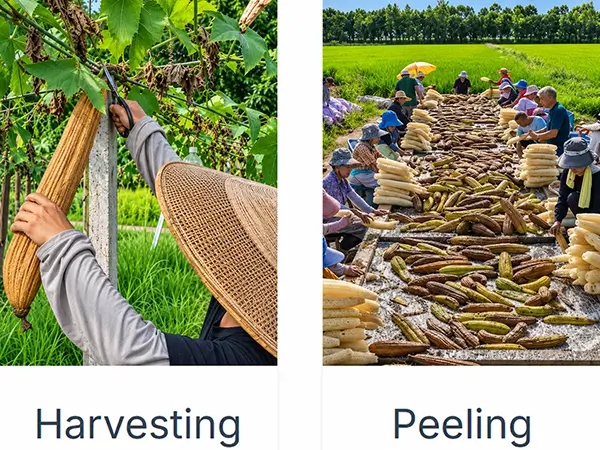
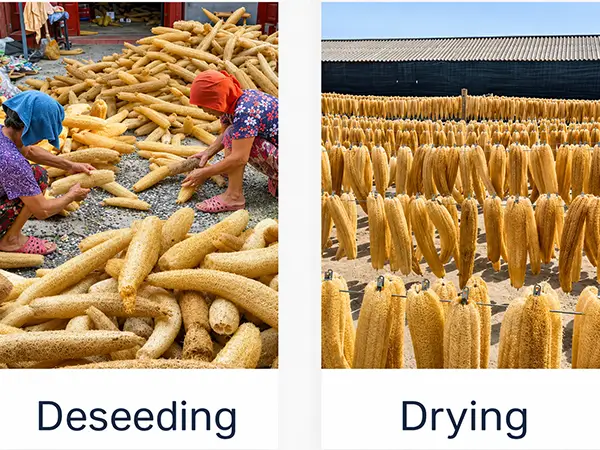
In both provinces, farmers and cooperatives grow loofah as a raw material for manufacturing. Once the gourds are fully mature, growers pick them, peel them, remove the seeds, then wash and air-dry them. They sort the dried loofahs by quality and size before sending them to factories.
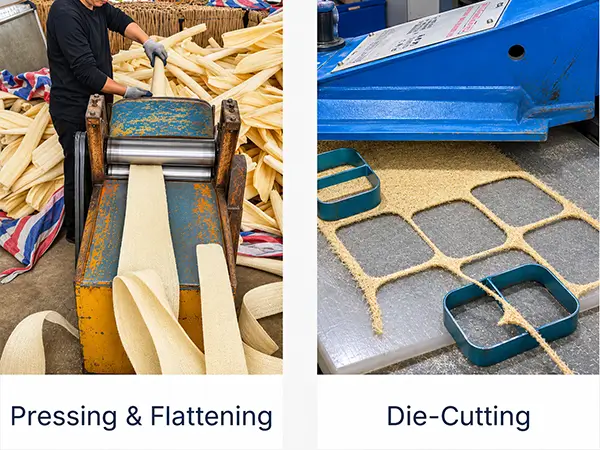
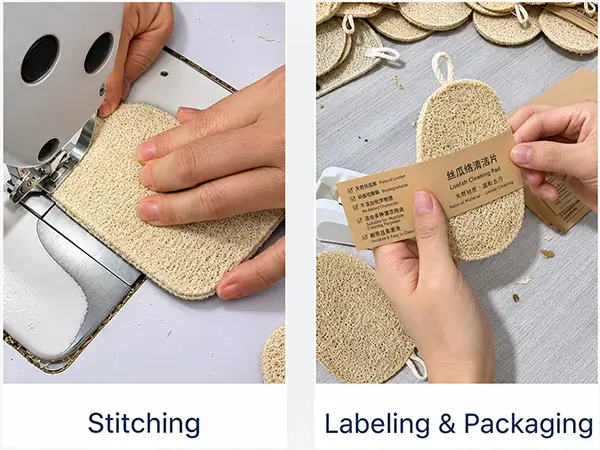
There, workers flatten, cut, die-cut, and sew the loofah into products like bath poufs, bath mitts, dishcloths, and kitchen sponges, then pack them for shipping.
In Zhejiang, much of the loofah is processed into finished products locally and exported directly. This March, a local cooperative secured an order for 75,000 loofah bath products destined for Europe and the U.S. In August, another 100,000 loofah dishcloths were getting ready to ship to the U.S.
Henan is one of China’s major agricultural provinces. One county alone has more than 667 hectares (about 1,650 acres) of loofah fields and produces around 16 million loofah gourds a year. The county has developed more than 100 loofah products and sells them to over 50 countries and regions. Sales came to nearly $6 million last year.
Many of those products were developed for specific markets. European households get natural loofah steamer mats, South Korean beauty salons get small facial massage pads, and one Saudi customer ordered custom extra-large bath scrubbers.
Steamer mats
Facial massage pads
Bath scrubbers
Some of Henan’s larger factories develop products in-house. Some have come up with more than 60 different loofah products and also take custom orders. They can change the size, thickness, or shape, bleach or dye the loofah, and combine it with other materials.
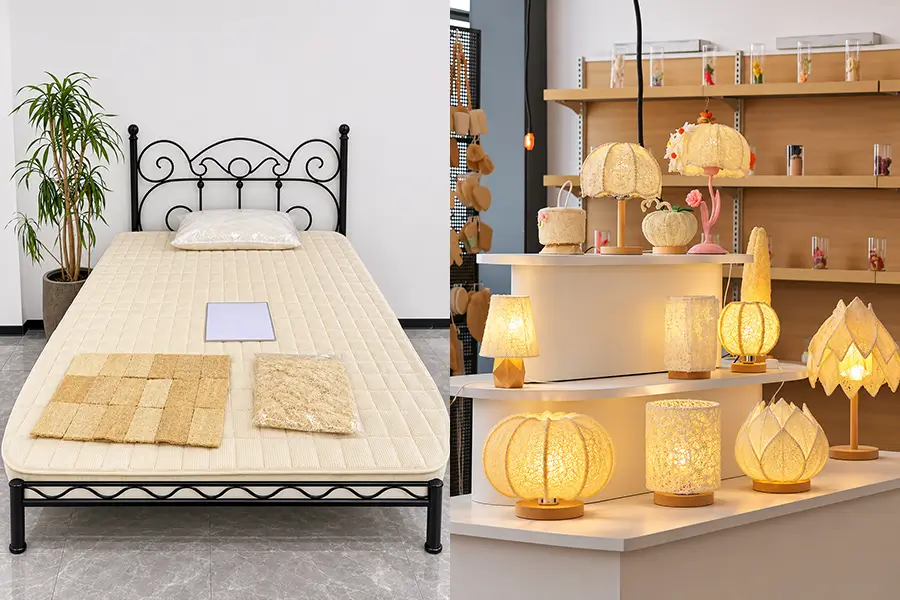
They flatten and cut it into insoles for slippers, sew cotton rope onto dyed pieces to make pet toys, or stack layers of loofah inside mattresses and pillows to let air circulate. They even cut it into thin slices and piece them together to make lampshades. Some loofah lamps with distinctive designs sell for $300 to $600 each.
Subscribe
Subscribe to us to see more sourcing insights like this one, plus startup stories, product ideas, case studies, and China sourcing stories.
Wholesale and Customize
Have great product ideas but not sure where to start? Or maybe you’re looking to buy products in stock, add your logo, customize packaging, or place a small order for quick testing?
Share your ideas. Get affordable, and effective sourcing solutions!