How One £50 Prototype Sparked a $200M Pizza Oven Business
Turning an idea into a real business doesn’t always require deep technical skills or brilliant marketing. Most of the time, it comes down to two things: Does the product solve a clear problem for enough people? And is there a supply chain that can actually make it happen? If you can build the product and get the supply chain to run, 80% of the business puzzle is already solved.
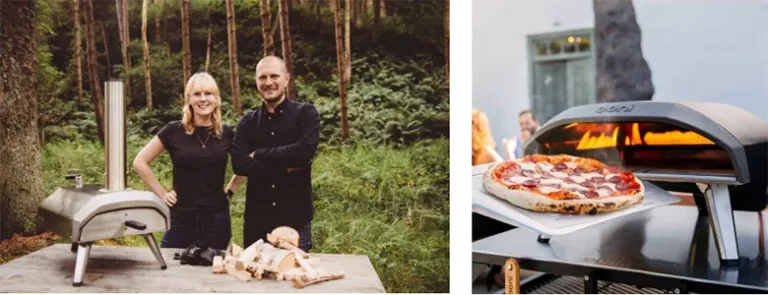
Ooni is the perfect example for what we’re talking about. It started with a Finnish couple living in a rented flat in London who simply wanted to make a real Neapolitan pizza at home. Here are the basics:
When my wife and I first got married, we were living in a small flat in London. Around that time, I became obsessed with making pizza at home. I kept adjusting my dough and ingredients, thinking I just needed better technique, until I finally realized the real problem was temperature.
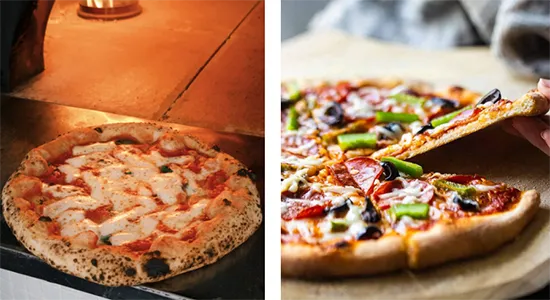
A proper Neapolitan pizza cooks at 450–500°C and comes out in under a minute, with the tall airy crust, a soft interior, and a thin, slightly wet center you get from real pizzerias. A home oven is capped at around 230°C, so no matter how perfect your dough is, you will never achieve that result.
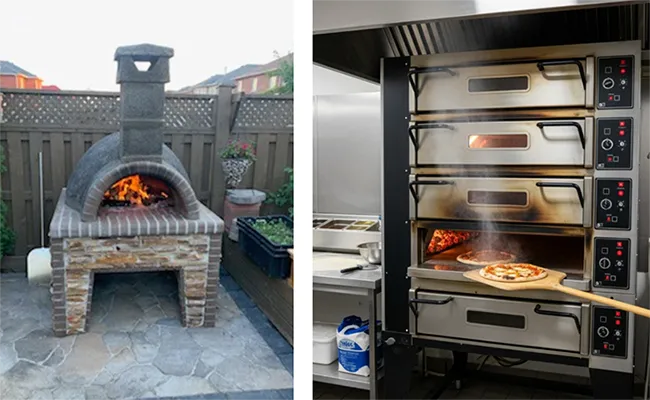
I started looking for an outdoor oven that could reach those temperatures, but everything I found on the market was huge, expensive, or required building a permanent brick structure. We were renting, and had limited space, and none of these options made any sense to us.
That’s when I realized a small, high-heat pizza oven should exist but it didn’t. I just knew I wanted a small, powerful, affordable oven that could make real pizza at home, and if I wanted it, surely there had to be others who wanted the same. So my initial goal was just to build a working ovens and sell a small batch locally.
How We Made Our First Design (With £50)
Making an "ugly" prototype first
After we decided to try building it, I spent the next month sketching ideas. Neither my wife nor I had any engineering background, so my “research” at that time was extremely basic, but practical: How do traditional pizza ovens reach and retain high heat? What materials heat up fastest? What kind of airflow and flame path creates that quick rise in temperature?
I read forums, watched how wood-fired ovens circulate heat, and studied the shape of commercial pizza ovens. The consistent pattern was clear: a small chamber, a powerful heat source, and a very deliberate airflow path. Once I had a rough concept, I used some simple 3D modeling software to visualize it.
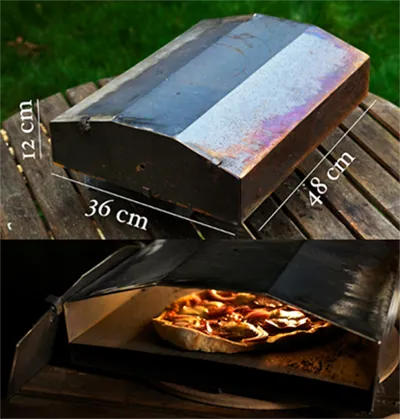
To build the first prototype, we reached out to a local fence-maker in London who normally worked with sheet metal. He made us a crude metal box for £50. For weeks, we fired the prototype up, threw in pizzas, and kept adjusting the shape and fuel intake. When we finally hit the temperature and saw the perfect pizza come out, we knew the idea worked, even if the prototype looked nothing like a product.
First attempt at small-batch production
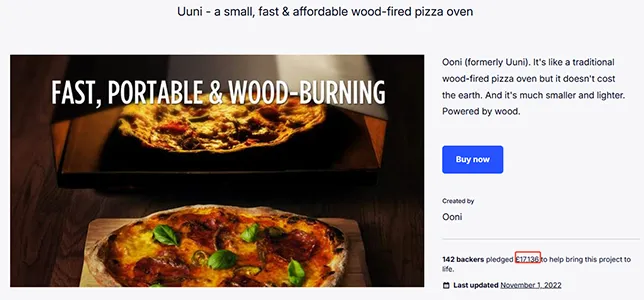
Our next step was simple: put it on Kickstarter and see if anyone else wanted this thing. Our initial goal was around $10,000. Just enough to cover the production cost. The campaign took off and raised far more than expected.
But then came the bigger shock: 40% of orders were from the United States. And our ovens weren’t tiny, they were heavy, bulky, and expensive to ship. So it came another problem: the small metal workshop that built our prototype simply couldn’t handle that volume.
So we found a manufacturer in Finland who agreed to take on the first run. We didn’t have a warehouse, logistics partner, or fulfillment system. We literally stored the ovens ourselves and carried them to the post office for shipping. Thankfully, our first batch was only 100 units, with a six-month shipping promise. If we had sold 5,000 units on day one, we would been crushed immediately.
Moved mass production to China
In the first two years, we worked with three different manufacturers in Finland and the UK. That period exposed several critical issues. Costs were extremely high. Capacity was limited. And structurally, a pizza oven isn’t one simple part. It’s a modular product: the metal body, stone baking surface, burner, handles, coating, fasteners, all come from different supply chains. In Europe, no single region could cover all of these components.
At one point, our third manufacturer even began selling a similar product under their own name. It became clear that if we wanted stable quality, better pricing, and real production scale, we needed to move. Step by step, we shifted manufacturing to China, where we could find all the required components and specialized suppliers in one ecosystem.
Spent 6 Months Improving It Into a Product People Loved
As sales grew, so did the problems. Every new batch exposed something we hadn’t seen before, and the only way forward was to fix issues one by one through real user experience. The earliest versions of the oven had fundamental engineering challenges, things like preventing the steel body from warping at 500°C, or keeping the exterior safe enough to touch. We solved those with better materials and redesigned double-wall structure.
But engineering wasn’t the only challenge. The oven also had to be as easy to use as a home appliance, not a piece of specialized equipment. That meant listening closely to how people actually cooked with it. When users told us one side tended to cook faster or burn, we treated it as a design problem. Through a lot of trial and error, adjusting airflow, changing flame direction, and experimenting with chamber geometry. We eventually developed the L-shaped side flame that created even heat across the oven ceiling.
From London Workshops to China’s Manufacturing Clusters
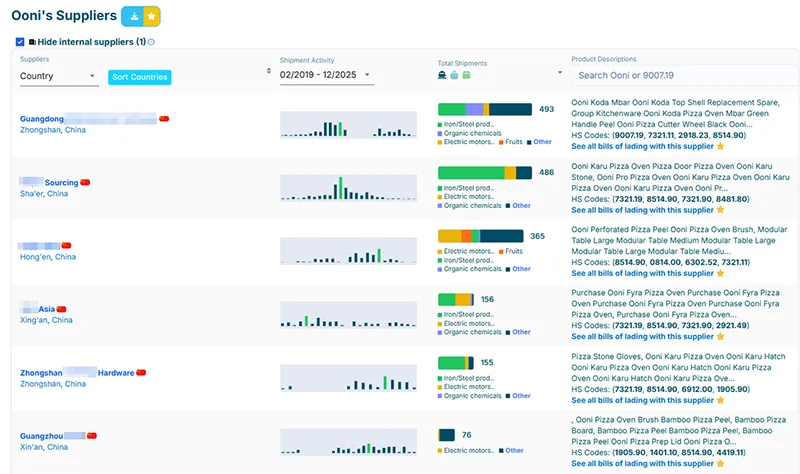
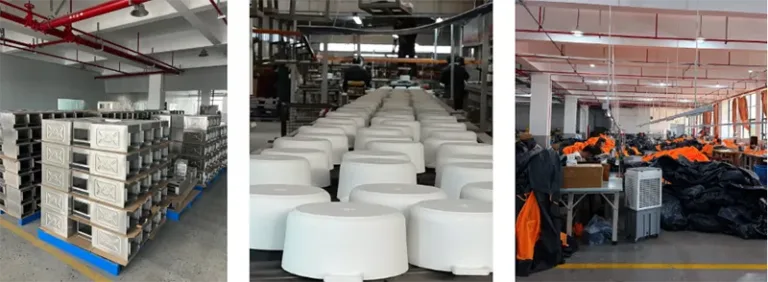
We now work with many factories, including small suppliers that grew with us, and sourcing agent. Across our product line, more than ten Chinese suppliers across the line.
Finding suppliers in the right manufacturing hubs
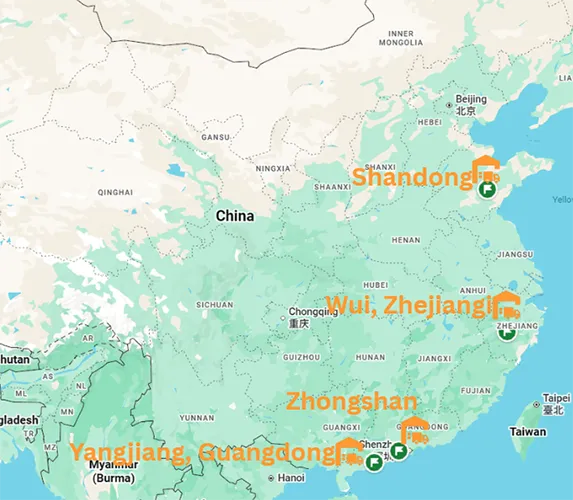
About 80% of the world’s outdoor grills and high-temperature cooking equipment are produced in China, especially in certain regions like Guangdong, Zhejiang, Shandong. So our supply chain naturally spread across the major manufacturing clusters:
Zhongshan, Guangdong for oven appliance & burners
Yangjiang for peels and metal tools, drawing on its global knife-making expertise
Shandong for cast-iron cookware
Wuyi, Zhejiang for fabric covers
Building Partnerships From Scratch
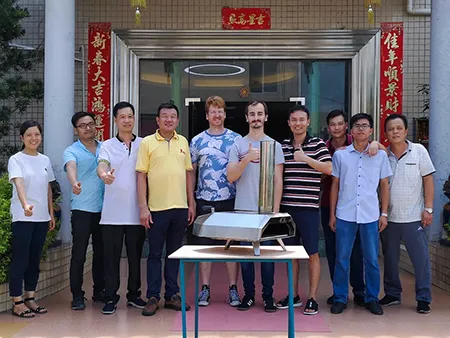
The factory that produces our core ovens today is actually the same one we worked with at the very beginning. At that time, they were a small-scale manufacturer, small enough to accept our low MOQs and flexible enough to work through early prototyping with us. For a young company like ours, that made all the difference. As our volume increased, they grew with us. The relationship has always been mutual: they wanted to build a strong business, and we needed a partner who cared about quality and longevity as much as we did. Along the way, a good sourcing agent or trade company can save a lot of trial-and-error by navigating the local supply chain, identify reliable suppliers, and match the right factories to the right products.
With the business scaling, collaboration naturally deepened. We began flying to China regularly to work side-by-side with engineers and production teams. Together, we refined designs, solved technical challenges, and planned production cycles for new models. Those on-the-ground sessions became a core part of how we develop and launch technical products today.
How We Grow One Niche Into a Full Brand?
After the first oven launched, something became obvious to us very quickly. People weren’t just buying a tool; they were learning a craft. Every time someone used the oven at a gathering, people would ask questions, compare dough recipes, and share their own attempts at making pizza. That social element formed naturally around the product, and the community grew on its own. The conversations kept circling around the same practical needs.
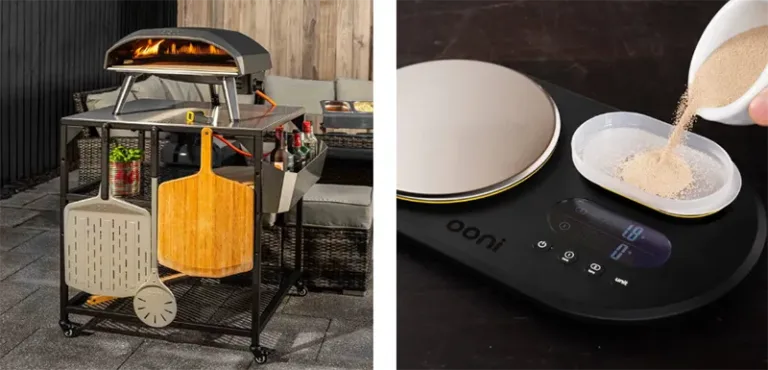
So we began expanding into the tools that supported those moments: pizza accessories, peels, dough fermentation boxes, and eventually outdoor kitchen setups with modular tables. Each time we saw a recurring problem in the community, we built something to solve it.
Subscribe
Subscribe to us to see more startup stories like this one, plus China sourcing stories, product ideas, insights, and practical tips.
Wholesale and Cutsomize
Have great product ideas but not sure where to start? Or maybe you’re looking to buy products in stock, add your logo, customize packaging, or place a small order for quick testing?
Share your ideas. Get affordable, and effective sourcing solutions!

Leave A Comment