Behind the Viral TikTok Umbrella: Inside China’s Umbrella Capital
The Simple Umbrella Became a Global Hit
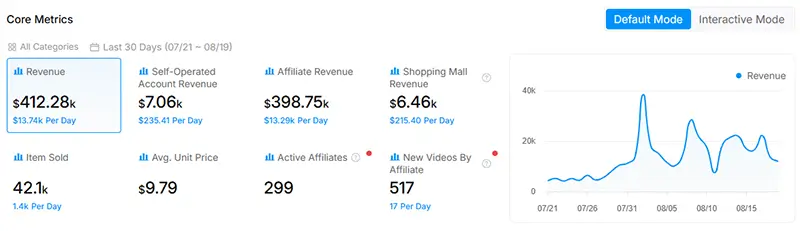
2.2M+ views. 100K+ units sold in the US. Peak daily orders hitting 4,000+ in the UK. This “North Korean Umbrella” Went Viral on TikTok. One creator video alone generated over $200K in GMV within a month.
But whether it was presented as a “North Korean umbrella” or a “Japanese umbrella,” its journey can be traced back to China, from product development to manufacturing.
So, let’s look at how China’s umbrella manufacturing clusters turn small design changes into products ready for global markets.
Behind The Viral Umbrella: China’s Umbrella Manufacturing Hubs
More specifically, it connects China’s two major umbrella manufacturing hubs: Shaoxing in Zhejiang and Quanzhou in Fujian. The company behind this viral umbrella worked with a network of suppliers across these two manufacturing hubs, combining product development in Shaoxing with large-scale production in Quanzhou.
Shaoxing: where the product takes shape
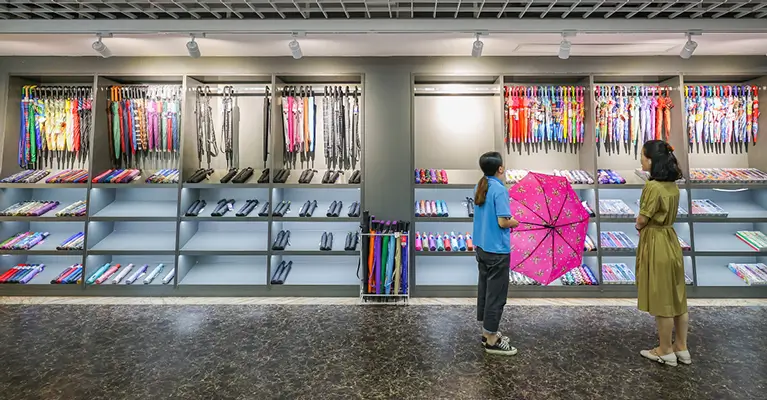
Shaoxing’s Songxia Town is known as China’s “umbrella capital.” The area is home to more than 1,400 umbrella suppliers and produces over 650 million finished umbrellas annually.
For this viral umbrella, Shaoxing played a key role in turning an initial product idea into a market-ready design. The region’s dense supply chain allows companies to quickly adjust designs, test samples, and improve products based on customer feedback.
Quanzhou: where the product scales
While Shaoxing supports product development and fast iteration, Quanzhou provides the manufacturing capacity needed when demand grows. Quanzhou, especially Jinjiang’s Dongshi area, has a long-established umbrella manufacturing base focused on large-volume production, mature and assembly lines.
Once sales take off, Quanzhou helps them scale production quickly.
The making of a viral umbrella
The viral umbrella’s success came down to a few distinct product details:
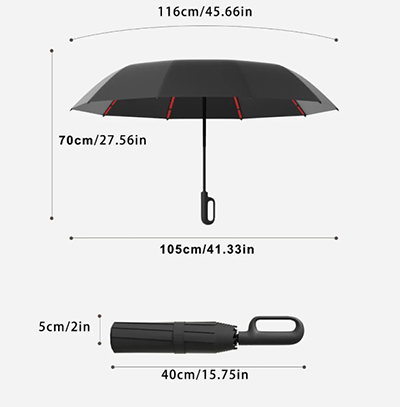
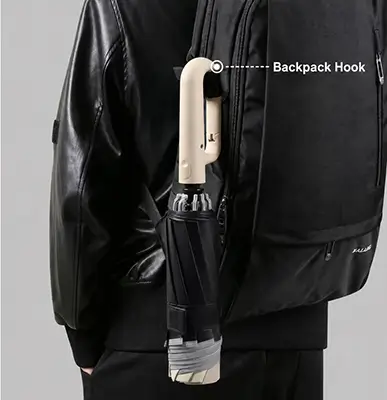
Carabiner Ring Handle: Rotates 360 degrees to clip onto backpacks, car hooks, or desk edges.
Automatic Open Mechanism: Enables effortless one-handed operation.
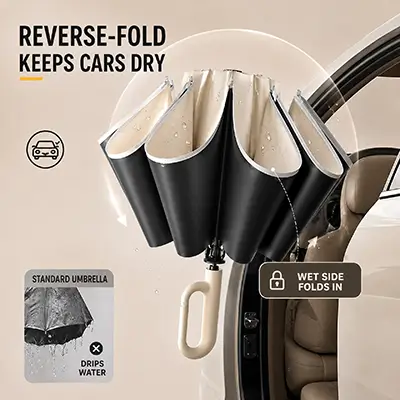
The product has continued to evolve beyond its original viral design. We found that newer versions introduced features such as reverse folding technology, which keeps rainwater contained inside the umbrella after closing, helping users stay dry when entering cars or indoor spaces.
Available in 23-inch and 27-inch sizes, these upgraded models can be sourced from China for under $5, depending on specifications.
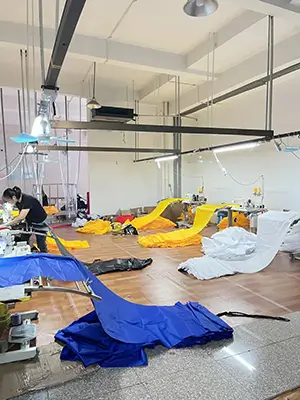
To understand how this product was developed, we need to look at the multi-step manufacturing process behind every finished umbrella:
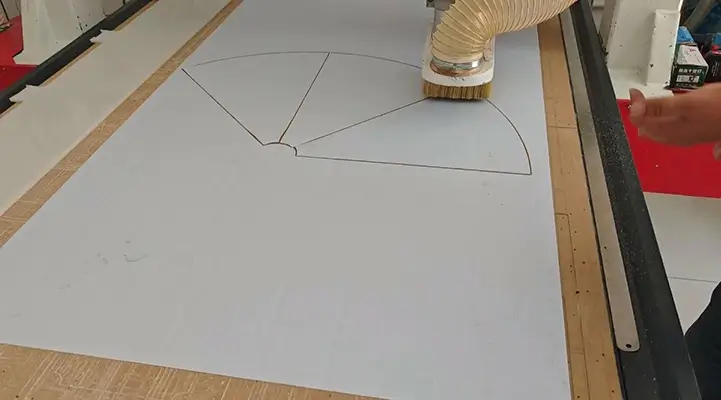
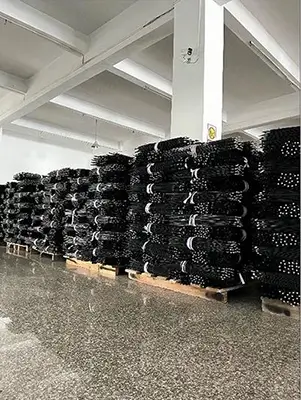
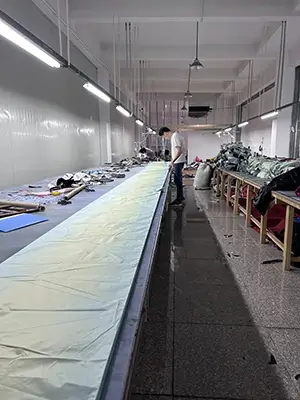
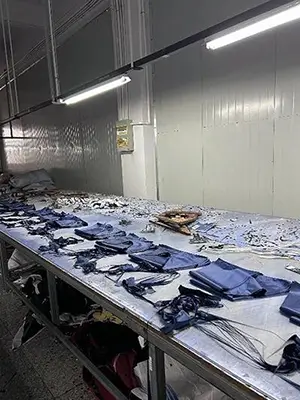
Fabric & Parts Preparation: Printing and cutting canopy fabric, stamping metal frames/ribs, and injection-molding plastic components (handles, top caps, and tips).
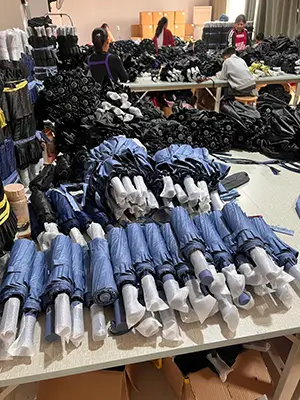
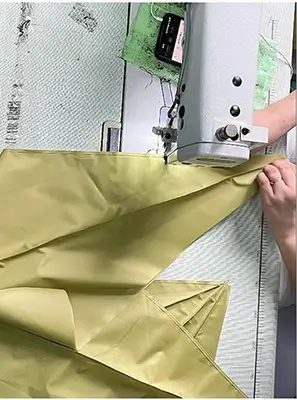
Canopy Assembly: Precision-stitching individual fabric triangles together and sewing on edge beads.
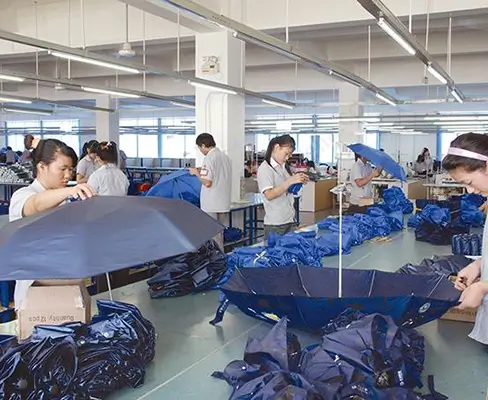
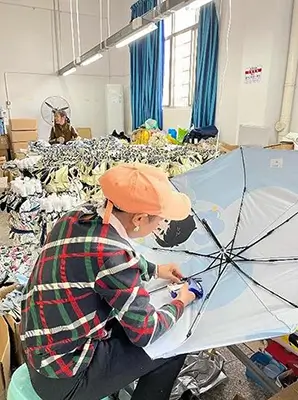
Frame Fitting & Riveting: Mounting the sewn canopy onto the metal frame and riveting the structural joints.
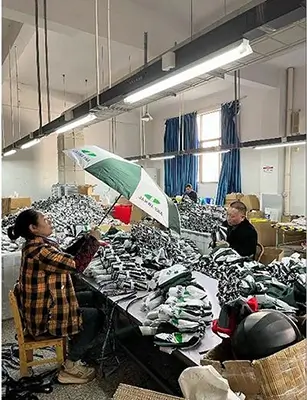
Final Assembly & Packaging: Attaching the handle, testing the spring mechanism, quality checking, and boxing.
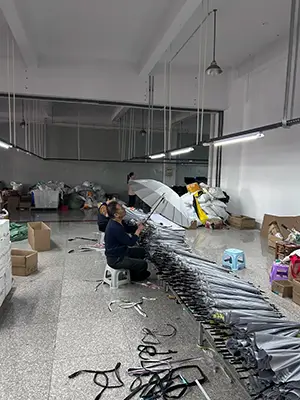
Umbrella Frame
Umbrella Fabric
Fabric Cutting
Fabric Panel Stitching
Fabric & Frame Assembly
Quality Check
This is where China’s umbrella manufacturing clusters create an advantage. Even small design changes can require coordination across multiple parts of the supply chain.
For example, changing the handle may require adjustments to plastic injection suppliers and molds. Reducing weight may require changes to the frame structure. Updating patterns requires coordination between fabric printing, sewing, and assembly.
What Makes an Everyday Product Stand Out
Everyday products like umbrellas are not categories where sellers win by simply adding more features. But successful sellers can still create strong demand when they understand customer needs, find the right use cases, and have the supply chain to turn small ideas into better products.
After sourcing products for different markets, we have learned that opportunities often come from small details customers actually care about. Sometimes, a better material, a smarter structure, or a design built around a specific problem can make a product stand out.
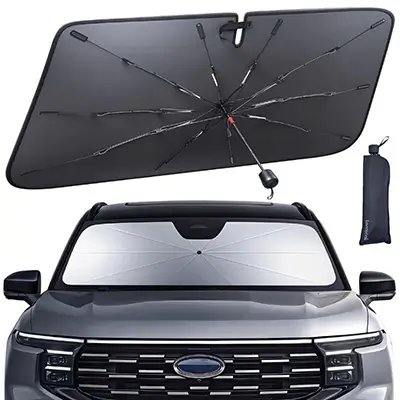
Car Sunshade Umbrella
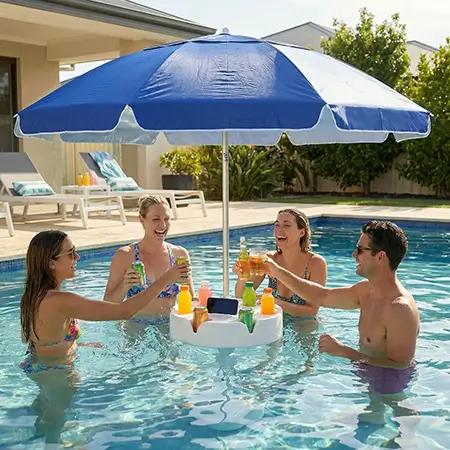
Floating Pool Umbrella
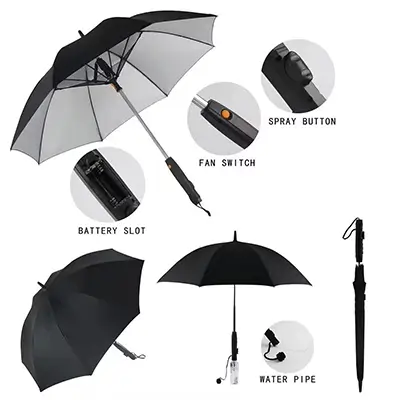
Umbrella with Misting Fan
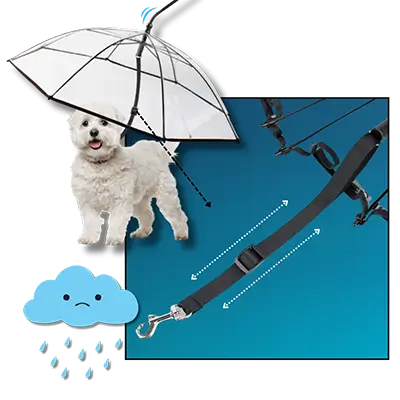
Dog Walking Umbrella
Solving a specific scenario
Umbrella designs and features vary by market.
In the UK, where rain and strong winds are common, customers often prefer larger canopies, stronger frames, and classic styles such as black or navy umbrellas.
In Japan, buyers pay more attention to lightweight designs, quiet opening mechanisms, compact folding structures, and tested UV protection performance.
In the US, demand is more divided. Urban users often look for compact umbrellas that fit into bags, while outdoor users prefer larger golf umbrellas for both sun and rain protection.
What factory photos never tell you
From years of sourcing umbrellas for different markets, we found that product differences are often hidden in materials and manufacturing details that are hard to spot in the photos factories send you.
Two umbrellas may look almost identical in a product photo, but their performance can be completely different after production. The real differences often come from details such as frame materials, fabric weight, waterproof coatings, and metal treatment. These factors directly affect durability, weather resistance, and customer experience.
For example, in colder markets such as Russia and Central Asia, fiberglass frames often perform better than thin steel frames because ordinary steel can become brittle in low temperatures. For the same eight-rib umbrella, a stronger fiberglass structure can handle stronger wind and temperature changes much better than a cheaper steel version.
Subscribe
Subscribe to us to see more case studies like this one, plus startup stories, product ideas, sourcing insights, and China sourcing stories.
Wholesale and Customize
Have great product ideas but not sure where to start? Or maybe you’re looking to buy products in stock, add your logo, customize packaging, or place a small order for quick testing?
Share your ideas. Get affordable, and effective sourcing solutions!