We talked to a few of our long-term clients recently, and we all noticed the same thing: demand for senior-focused products keeps rising, and buyers are zeroing in on solutions to very specific problems. The more targeted a product is, the faster it tends to take off. According to Fortune Business Insights, the global elderly-care market is expected to reach $1.77 trillion by 2030, and with aging populations accelerating, this momentum is only getting stronger.
So we pulled together 8 senior product categories that are growing fast, showing clear breakout potential, and gaining real traction heading into 2026.
From Everyday Struggles to Steady Sellers
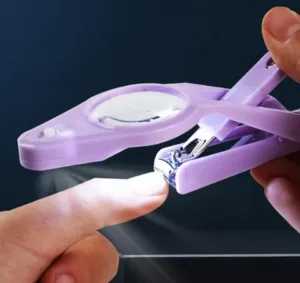
A lot of opportunities in the senior market hide inside the smallest, most ordinary daily struggles, things younger people barely notice, but older adults deal with every single day. Tiny text on bills, unclear labels on medicine bottles, restaurant menus that are impossible to read, or even trimming nails without being able to see the edge clearly. These minor inconveniences are real, recurring pain points.
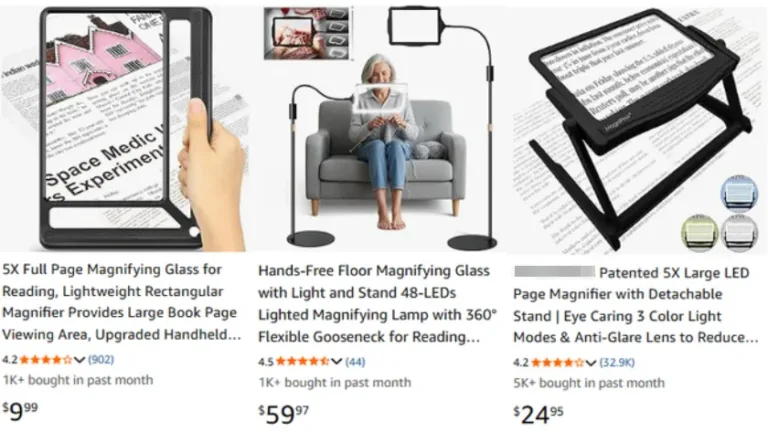
That’s exactly why magnifiers and reading-assist tools have produced so many breakout products on Amazon and across the low-vision market. They’re not complicated, and they don’t offer “50X zoom” or flashy features. They simply match the moment: reading books, scanning labels, checking instructions, reviewing documents, choosing items at the store. Whenever there’s small print, there’s demand.
Below are a few real examples that sell well among seniors: whether it’s the right size for everyday reading, easy to hold on the go, or just a straightforward plug-and-use tool that doesn’t require any fuss.
Traditional Categories are Becoming Fresh Opportunities
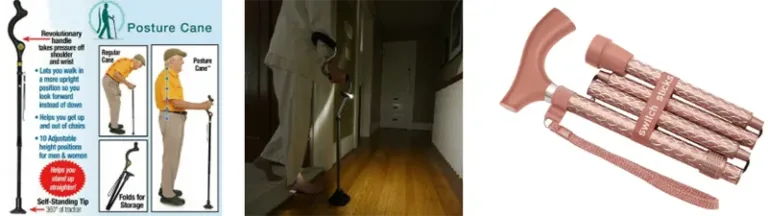
Canes are one of the most reliable and steady sellers in the senior market, and the category is far more segmented than it looks. Handle shapes affect comfort and leverage, the thickness of the shaft determines stability, and a quad base changes the cane’s overall balance and its ability to stand on its own.
Brands like Campbell Cane have built their whole product line around an angled, forward-positioned handle that helps reduce hunching and neck strain for seniors. Others, like Switch Sticks, focus on style: florals, colors, leather textures, even limited editions. The look and feel of canes have shifted from “medical device” to something much closer to “personal style.”
Smart canes are also evolving in a practical direction, focusing on features that genuinely matter: fall alerts, GPS location, night lighting, and even basic gait analysis, all aimed at safety and independence rather than flashy tech.
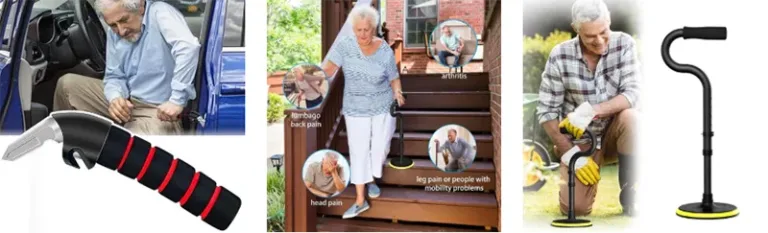
Beyond standard canes, scene-specific spinoffs are growing fast: gardening canes, car-entry support handles, stair-assist canes, and other micro-solutions designed around the small frustrations seniors deal with every day.
Rollators Are Evolving Into Lifestyle Tools
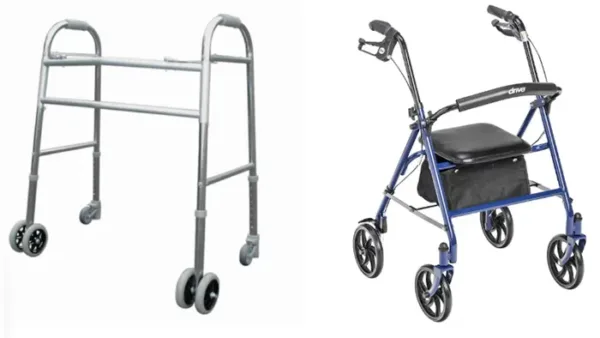
Traditional rollators were more like hospital equipment. But the market is shifting fast toward lighter, easier-to-fold models that fit real-world use.
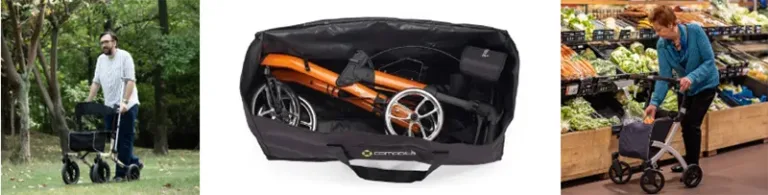
Rollators are growing quickly because they now take on three roles at once: helping seniors walk, offering a place to rest, and acting as a practical everyday tool when they’re out and about. The lightweight, foldable, seat-included 3-in-1 design matches how people actually use them—on neighborhood walks, in parks, while traveling, or even for short grocery runs.
Users want something durable enough for daily outings but not something that looks like medical gear. That’s why recent bestsellers tend to look more modern, fold more cleanly, and use larger, more outdoor-friendly wheels. moving from “clinical device” to “lifestyle mobility tool.”
Smart features are also moving in a practical direction. Some brands now offer built-in location tracking, night lights, reflective elements, and simple safety alerts. In Europe, brands like Saljol and byACRE have already leaned into this trend, emphasizing better low-light visibility and confidence outdoors.
High-Margin Foot-Care Products
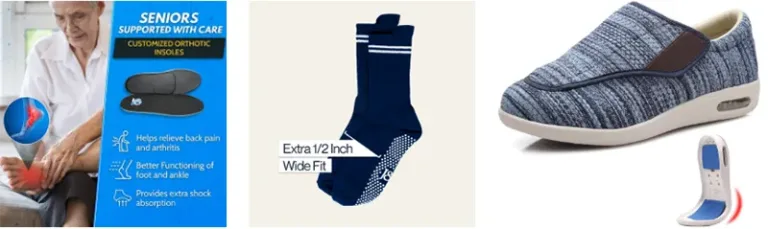
Everyday shoes for seniors usually focus on being light, stable, non-slip, and wide. But the faster-growing and far more profitable segment is actually functional foot-care products built around common age-related conditions. Think diabetic shoes, diabetic socks, arch-support insoles, and other upgrades that turn simple daily items into foot-health solutions.
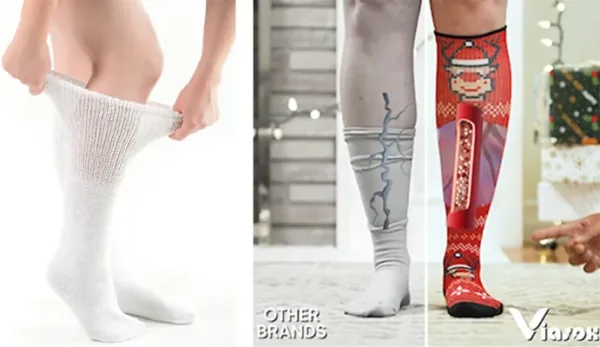
Take diabetic socks as an example. In our previous article, we mentioned a brand doing $700K+ a month from socks. The logic is straightforward: these products require noticeably higher standards in materials and construction. They’re typically thicker, softer, and looser than regular socks, around a 40% difference in structure to reduce friction, pressure points, and the risk of foot injuries. For seniors, that small upgrade directly translates into better comfort and better protection in daily life, which is exactly why this category supports such strong margins.
A Quiet Boom in Assistive Furniture
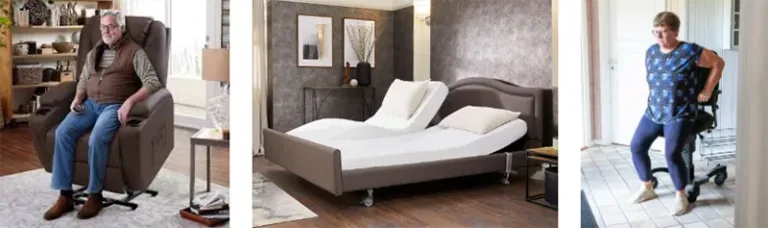
Mid- to high-ticket furniture for seniors is no longer limited to medical nursing beds. As the “sleep economy” expands, traditional home furniture is shifting from pure comfort to functional support. Products that once appeared only in clinical settings, like adjustable nursing beds, are now entering regular households. These beds offer gentle lift assistance, back and leg elevation, zoned support, and customizable firmness, along with user-friendly features such as under-bed night lighting, fall-prevention sensors, and ergonomic S-curve designs that reduce pressure points along the spine.
The same shift is happening with sofas and chairs. Power-lift recliners are becoming mainstream, helping users stand up more easily while offering optional heating, massage, and seat designs that provide better pelvic and lumbar support.
Missed Opportunity in Senior Fitness
The fitness product has been booming for years, but products designed specifically for seniors have long been overlooked. Older adults aren’t trying to “get stronger” in the traditional sense; their goal is to stay mobile, keep joints flexible, maintain muscle and balance, and slow down physical decline.
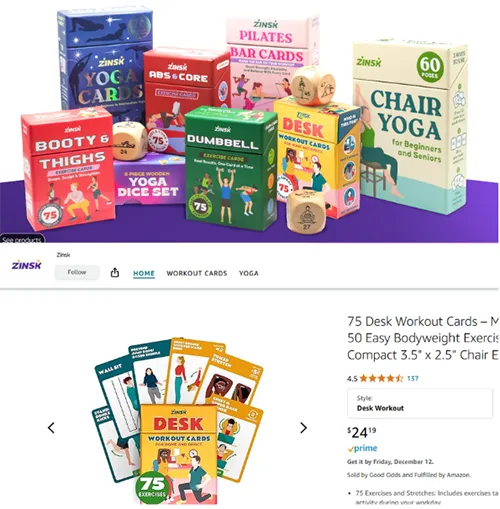
That’s exactly why simple formats like chair-yoga cards have taken off so quickly. The innovation is the delivery format: large print, step-by-step illustrations, clear breakdowns, and no apps, accounts, or devices required. Seniors can pick up a card and start moving for a few minutes, anytime. New listings on Amazon in this category often hit 500+ monthly sales shortly after launch.
And the category expands easily. A seller who starts with chair yoga can quickly branch into desk exercises, abs and core, pilates, bodyweight routines, even “exercise dice.” The content already exists everywhere on YouTube. Production stays low-cost with simple printing, lamination, or laser-engraving, and every new theme can naturally extend the product line. The category grows quickly because it gives seniors an easy, low-barrier way to stay active, a routine they can actually keep up with.
Small Design Fixes, Big Senior Demand
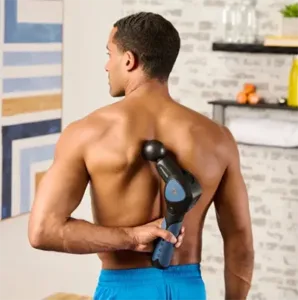
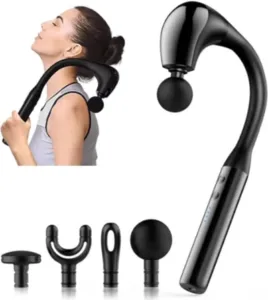
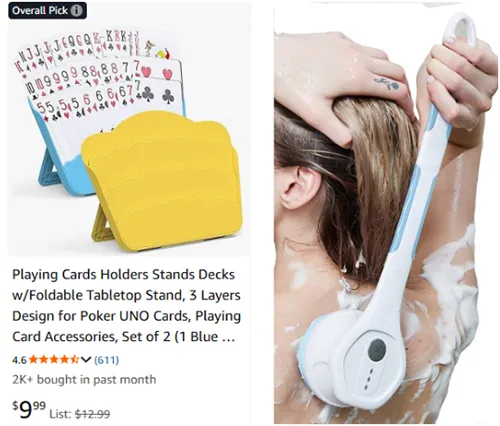
Many everyday tools only need a change in shape to unlock a completely new senior user base. Massage guns are a good example: the original straight, heavy designs were built for fitness users, but the newer U-shaped versions are lighter, easier to grip, and far more usable for older adults.
Gym-use, hard to reach
U-shaped, senior friendly
The same shift is happening in the bathroom. Tasks like scrubbing require bending, lifting the arm, and applying force. So wall-mounted scrubbers and lightweight portable electric scrub brushes are gaining traction.
Even the simplest ideas scale. A playing-card holder can hit 2,000+ monthly sales. It exists for one reason: seniors with shaky hands, arthritis, low grip strength, or hypermobile fingers often can’t hold cards comfortably. The product is simple to expand too, with versions for poker, bridge, euchre, rummy, and pinochle.
Cognitive & Memory Products Are Exploding
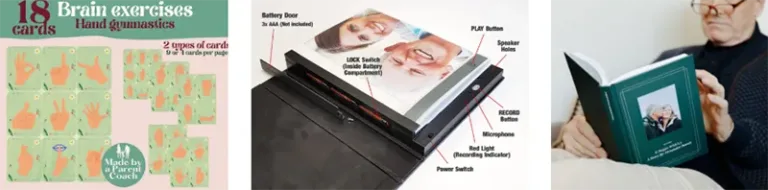
There’s a growing wave of senior products that focus on memory, attention, and emotional connection. Cognitive exercise cards, for example, are designed for people with Alzheimer’s or mild cognitive impairment and help them stay mentally engaged through simple, structured activities they can follow each day.
A similar shift is driving the growth of emotional-memory products: digital photo frames, voice-recorded story books, personal life albums, and digital keepsake journals. These formats make it easy for seniors to preserve their stories, while giving family members a meaningful way to stay connected to those memories. They touch a deeper need: feeling remembered, connected, and acknowledged.
Ultimately, the senior products that stand out, whether functional, aesthetic, or tech-enabled, are the ones that make age-related challenges easier to manage. As long as these needs exist, the category will continue to grow, driven by practical problem-solving and steady, sustained demand. We’re already seeing this on Amazon: instead of chasing broad categories, successful sellers focus tightly on specific daily challenges and design directly around real pain points.
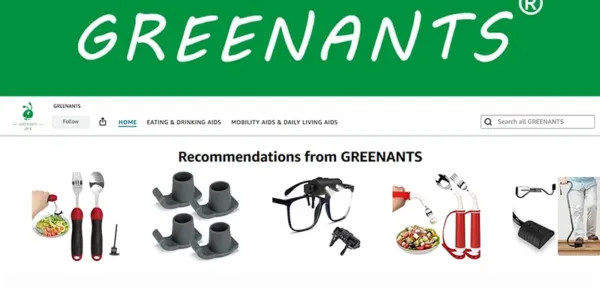
Brand Focused on Seniors’ Everyday Challenges
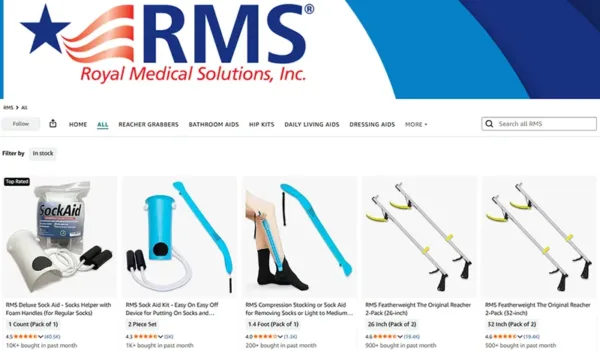
Brand Focused on Senior Sock Aids
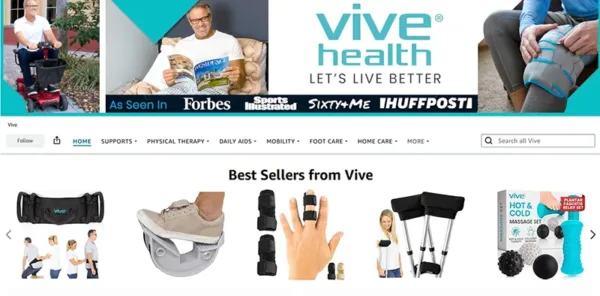
Brand Focused on Senior Rehab & Wellness Aids
Subscribe
Subscribe to us to see more product ideas like this one, plus startup stories, case studies, China sourcing stories, insights, and practical tips.
Wholesale and Cutsomize
Have great product ideas but not sure where to start? Or maybe you’re looking to buy products in stock, add your logo, customize packaging, or place a small order for quick testing?
Share your ideas. Get affordable, and effective sourcing solutions!