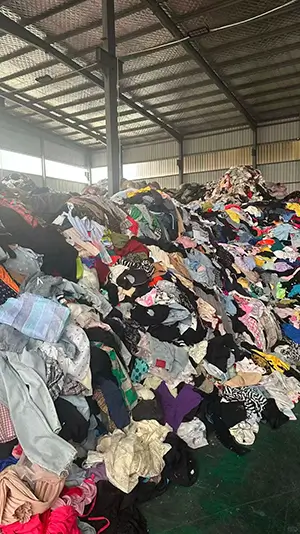
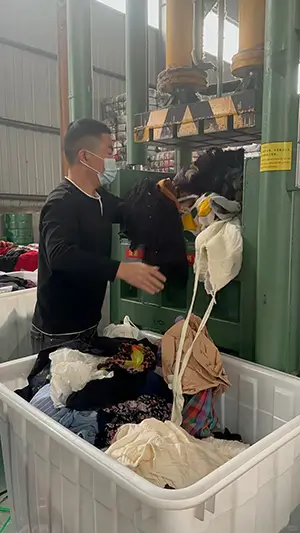
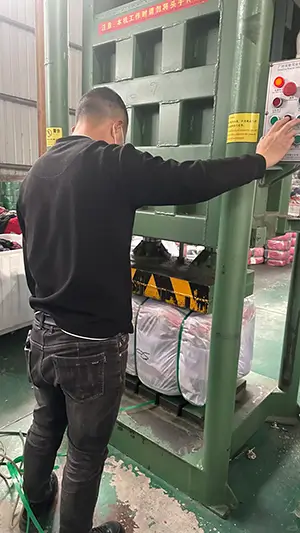
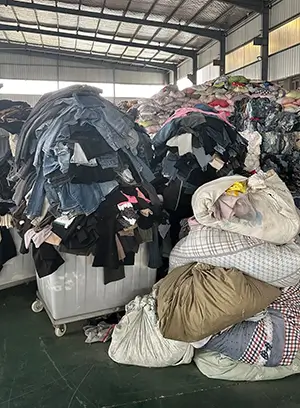
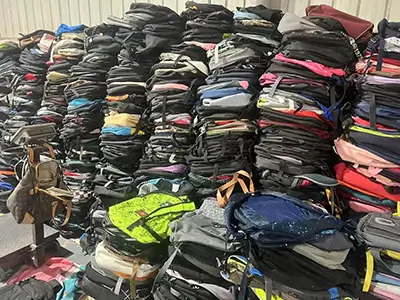
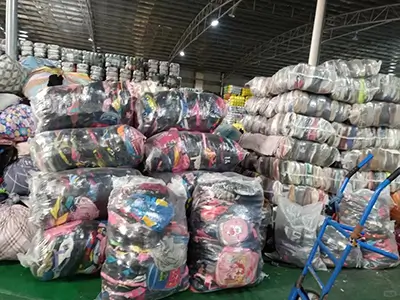
In China, second hand clothes are sold by the ton. About 7,000 pieces cost just $0.70 each. Yet after sorting, grading, and baling, the value can double or triple, and sometimes even more.
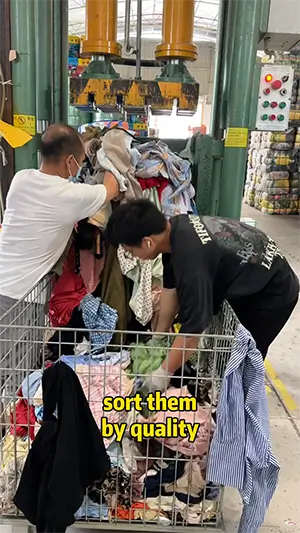
If you’ve seen viral social media videos of hydraulic machines crushing mountains of clothes into dense cubes, or wholesalers opening bales like giant mystery boxes, you’ve already seen part of China’s second-hand clothing supply chain in action.
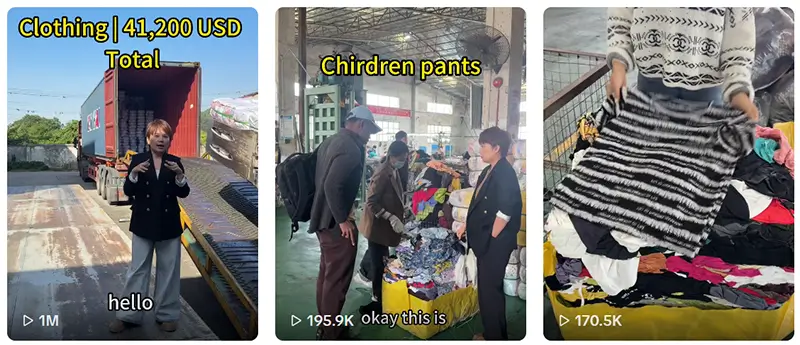
Today, we’re looking at where these bales come from, how they move through the supply chain, and where the real profits are made.
How Used Clothes Flow From China to Global Markets
The global secondhand clothing trade is already worth more than $4.9 billion and keeps growing, with China ranking among the world’s largest exporters.
So where do all these clothes come from?
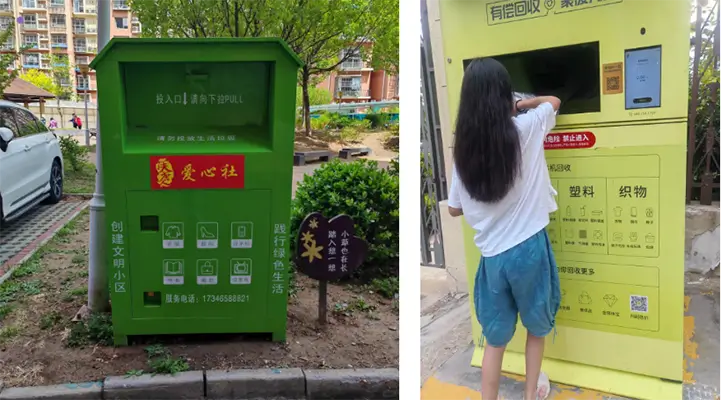
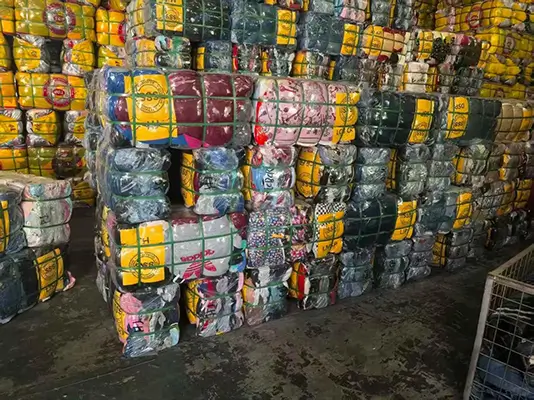
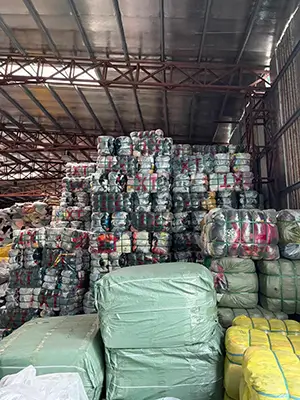
In China, used clothing usually starts with community collection bins or home pickup services. From there, it moves to warehouses, where workers sort it by category, material, season, and condition before compressing it into bales to save space and cut shipping costs. The bales are loaded into containers and shipped to markets around the world.
Different markets want different products. Summer clothing usually moves to Africa and parts of Southeast Asia, while some winter clothing stays in China for resale or goes to colder markets such as Russia.
Behind the Bales: Inside China's Sorting Warehouses
Inside the sorting line: Why some clothes are worth more
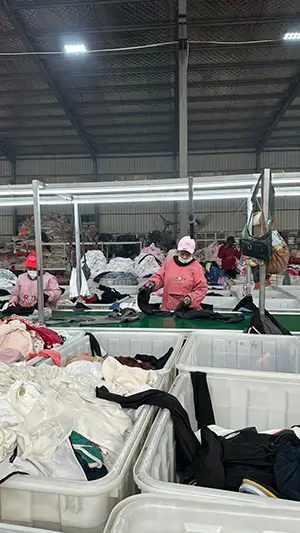
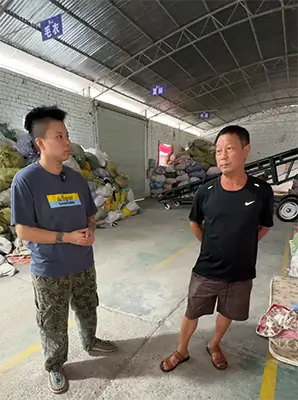
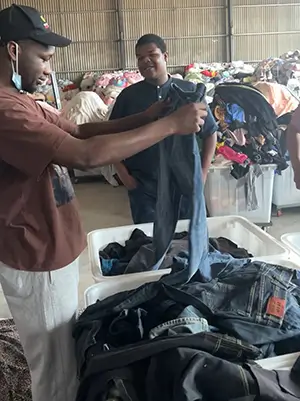
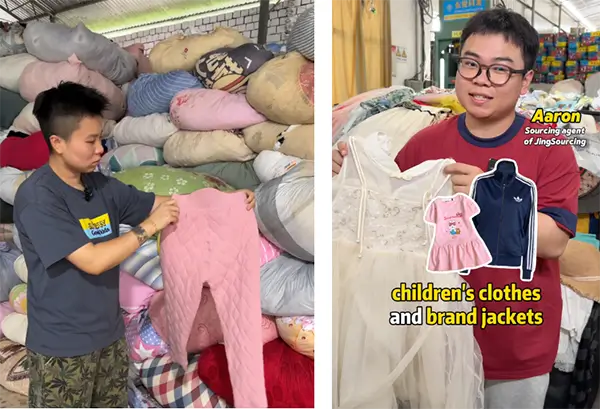
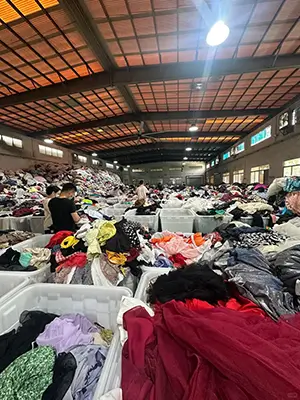
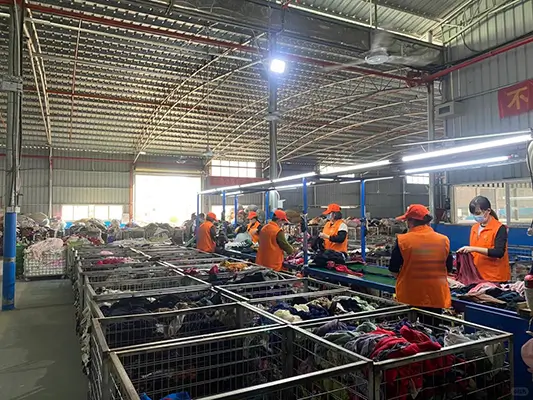
Follow our sourcing agent, Aaron, to see what happens inside a sorting warehouse. Once bulk shipments arrive, they enter industrial sorting lines where workers manually inspect every item. Damaged goods, heavily stained pieces, and non-sellable items are filtered out early in the process.
The remaining garments are then categorized by type, material, season, and quality grade before being prepared for compression and export. Interestingly, workers sometimes find forgotten cash, and occasionally even gold jewelry, hidden in the pockets during the sorting.
On average, a ton of second-hand clothing can range from around $800 to $2,500, depending on category and demand.
- Most Expensive: Kids’ clothing and well-preserved branded jackets.
- Cheapest: Women’s clothing and standard winter wear
How African buyers secure their inventory
The warehouse owner told us that most of their clients are from Africa and Southeast Asia, where demand for affordable, wearable clothing is consistently high. Many buyers place repeat monthly orders in large volumes, and some even stay on-site for one or two weeks, selecting bales to ensure the right mix and quality.
To control costs, many factories mix different quality grades within the same bale. However, some larger suppliers operate local sales teams in Africa. These teams categorize products by fabric, style, season, and gender, creating catalogs with dozens of categories and hundreds of subcategories, supported by photos of real models.
Customers can select products from the catalog, and Chinese factories then assemble customized bales based on their selections.
How unsold clothes, shoes, and textiles are recycled
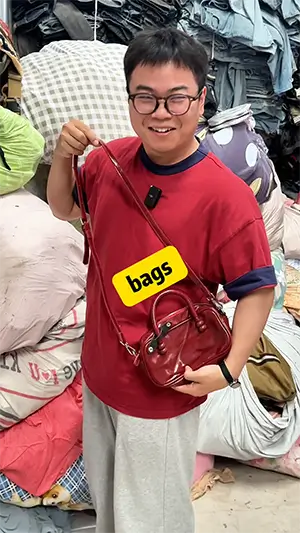
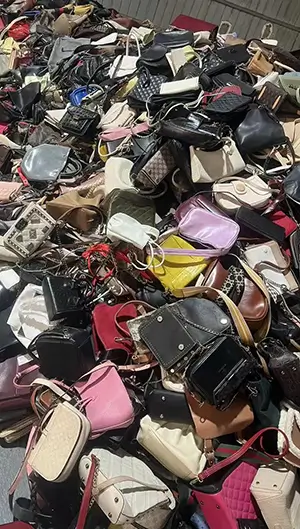
Shoes and bags are also part of the secondhand export business. They are usually sorted separately by type, condition, and style, then exported through similar channels as used clothing.
But not every item can be resold. White garments, for example, may still look clean during sorting, but they tend to yellow over time, making them difficult to sell as secondhand clothing. These items are often sold to textile recycling factories in China and processed into recycled textile products.
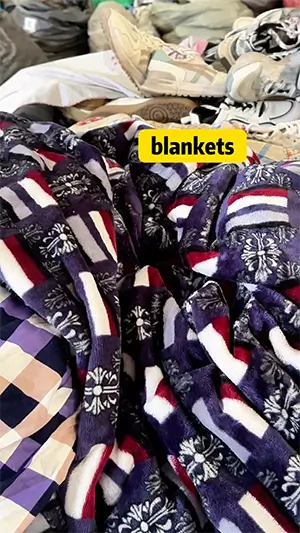
Plush toys are often resold through claw machine operators, while cotton filling from quilts and bedding can be reused as stuffing for plush toys and other products. Textiles rejected by both secondhand markets and recycling factories are eventually sent to waste-to-energy plants, where they are incinerated to generate electricity.
China’s Second-Hand Clothing Supply Chain
China’s second-hand clothing supply chain is concentrated around Yiwu, Guangzhou, and nearby regions. Many large used-clothing exporters and sorting companies operate in these areas, making them key collection, sorting, and export hubs for the industry.
These regions benefit from:
- Extensive used clothing collection networks
- Access to major ports and logistics networks
- Large-scale sorting facilities
- Textile recycling and reprocessing facilities
Many suppliers offer not only used clothing, but also shoes, bags, household textiles, plush toys, and other related categories.
Second-Hand Clothing Trade 3 Main Business Models
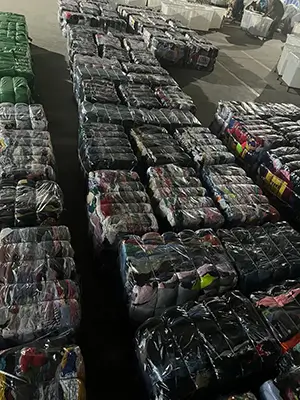
A mixed bale is a bit like a blind box. Most are sorted into broad categories such as summer wear, winter wear, or kids’ clothing. But the real value depends on what is actually inside: quality consistency, grade mix, and how many items can be resold directly.
Bulk wholesale bale
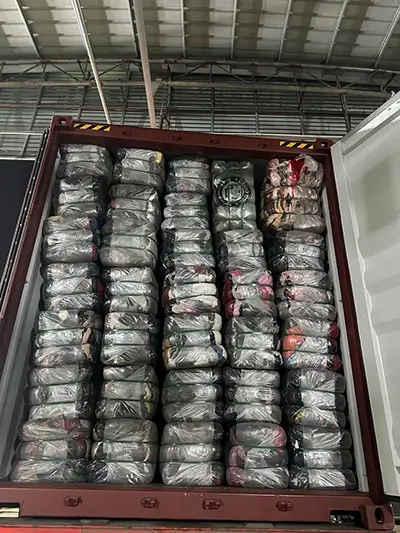
Large wholesale traders typically import full container loads and manage customs clearance, warehousing, and redistribution to downstream buyers. A single container is often split into multiple bulk buyers after arrival. Typical buyers include regional wholesalers, retail distributors, and cross-city resellers.
This model requires significant upfront capital and strong cash flow management, as inventory and shipping costs are paid long before final resale. Profit comes from scale, speed, and consistent supply volume and variety.
Middle wholesaler
Local wholesalers purchase bales and then sort or redistribute them into smaller packages. They act as intermediaries between large importers and retail sellers, repackaging goods by category, quality, or season before reselling them to small shops, market vendors, and online sellers.
Their value lies in understanding local demand and turning unpredictable bales into more marketable product assortments. This helps customers buy with greater confidence and sell more consistently.
Profits come from price differences between grades, product expertise, and long-term customer relationships. In many cases, inventory is stored in local warehouses where buyers can inspect and handpick items before making a purchase.
Resale retail
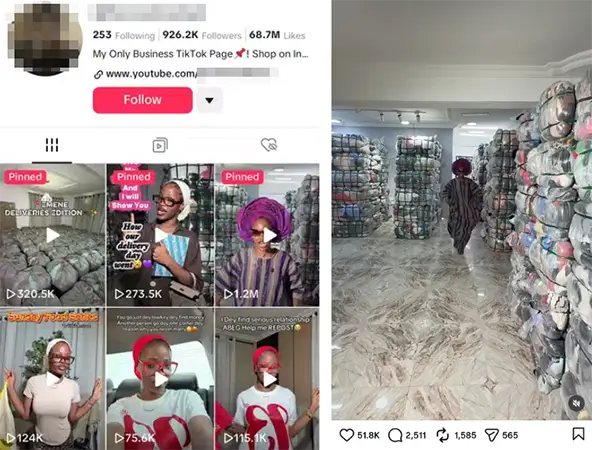
Retail sellers include thrift stores, market stalls, and social media resellers. They usually buy small quantities or selected bales, then open the bales and sell individual items directly to consumers.
This model can generate the highest margin per item, but it also requires the most time and effort. Sellers need to take photos, list products, communicate with customers, and often sell through local shops, market stalls, or live streams on TikTok, Facebook, and Instagram.
Profit mainly depends on the markup per item and how fast inventory turns over. The biggest risk is unsold stock, which can quickly tie up cash.
How to Order Your First Mixed Wholesale Bale
If you are ordering online for the first time, the process usually starts with a packing list. Buyers need to specify the product categories, quality grades, and required weight per bale. Based on this information, the supplier will provide a quote and recommend suitable product combinations.
Most suppliers classify inventory into grades such as A, B, and AB, mainly based on quality and condition. Once the order is confirmed, the factory starts sorting, grading, packing, and loading the goods. This usually takes about one week.
For African markets, sea shipping from China to Kenya usually takes around 30–40 days. After customs clearance and local delivery are included, the full process often takes about 40–55 days. The exact timeline depends on vessel schedules, port conditions, and customs efficiency.
Smart buyer tips:
Yes, scams do exist in the used-clothing trade. In practice, experienced long-term importers visit China regularly to verify grading quality in person and establish direct sourcing relationships with suppliers. On-site inspection plays a key role in this industry.
New buyers typically start with small trial orders placed online or through locally familiar agents or intermediaries to reduce risk and assess supplier credibility. The highest risk is concentrated among first-time buyers who rely entirely on online communication.
However, grading systems such as A, B, and AB are not strictly standardized and may vary between factories, as there is no unified industry-wide grading framework. Common risks include:
- Grade mismatch
- Hidden defects
- Misleading photos or videos
- Fake suppliers
As a result, first-time buyers should verify suppliers through multiple channels, including real-time videos, packing lists with photos, export history, or on-site inspection where possible.
Subscribe
Subscribe to us to see more China sourcing stories like this one, plus startup stories, product ideas, insights, and case studies.
Wholesale and Customize
Have great product ideas but not sure where to start? Or maybe you’re looking to buy products in stock, add your logo, customize packaging, or place a small order for quick testing?
Share your ideas. Get affordable, and effective sourcing solutions!