How niche are we talking when it comes to pet products? Today we’re looking at a brand built around a “weird” idea: treating chickens like pets — Omlet. The core product is chicken coops designed for backyard homes. A premium setup goes for around $1,500–$1,700. They’ve already sold over 125K units, and annual revenue has passed £40M (roughly $50M+).
A Niche Hobby or a Stable Demand?
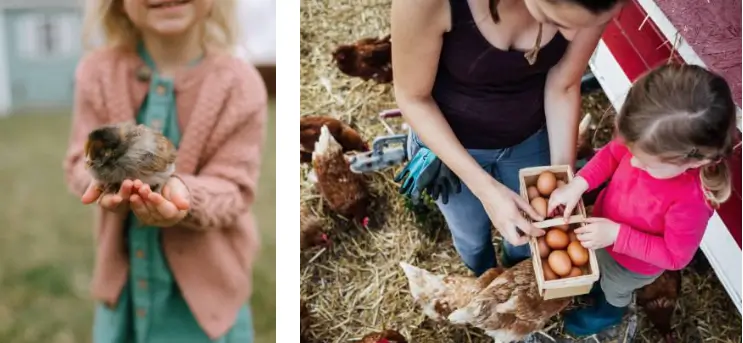
Not just about getting fresh eggs, people are raising chickens to lean into a more natural and sustainable lifestyle. For many families, it also becomes an easy way for kids to understand where food actually comes from, without it feeling like a lesson.
It starts to look less like farming, and more like a hybrid experience: It’s basically like having a pet that happens to lay eggs. Customers buy a nice home for them, keep them fed and watered, regularly collect fresh eggs, and enjoy sharing fresh backyard eggs with neighbors or friends.
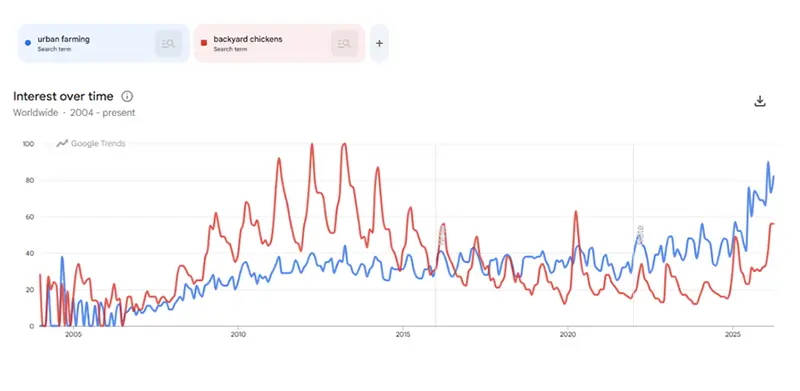
Let’s Look at Google search trends and the pattern is pretty clear. Keywords like “backyard chickens” and “urban farming” have been steadily growing. Every spring (March to May), search volume spikes. That’s when people buy chicks and start setting things up.
The turning point was 2020. During the pandemic lockdowns, keeping chickens became a mental sanctuary for many. But what’s more interesting is that the trend didn’t fade afterward. It stabilized into a more durable demand category.
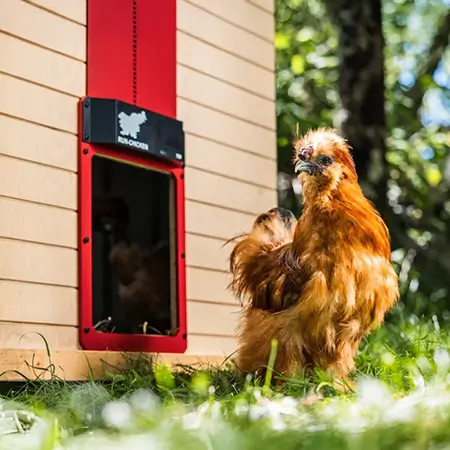
As it evolved, so did the product ecosystem. Just like the smart chicken coop door product we’ve talked about before, it became more tech-enabled and maintenance-friendly.
How 4 Graduates' Project Became a Product
The Tesla of chicken coop
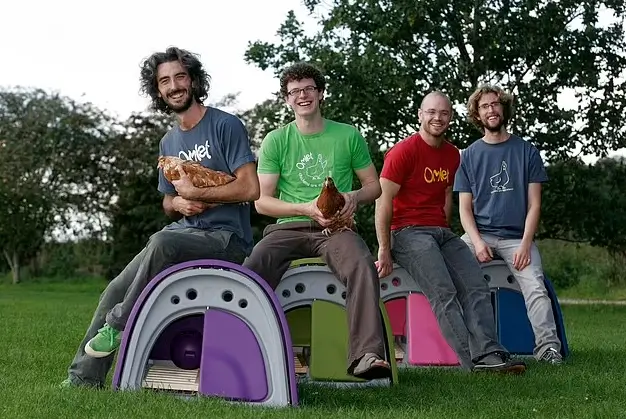
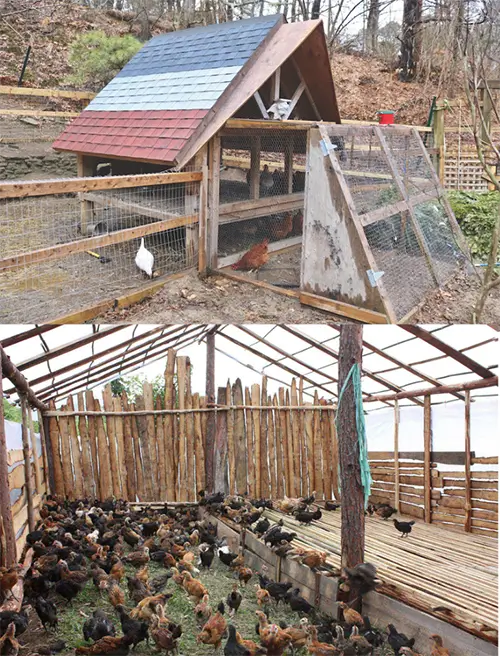
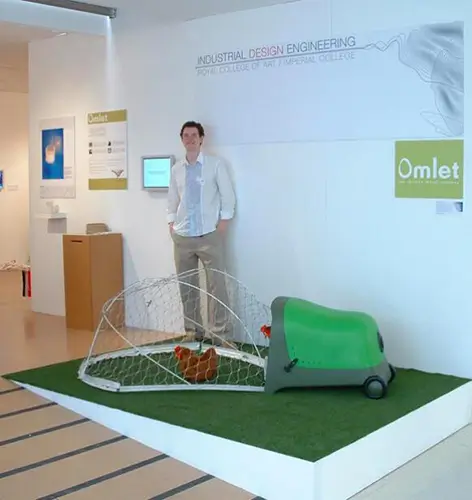
Let’s go back to where the idea came from. It was started as a graduation project by four UK industrial design students — Johannes, James, Simon, and Will. Traditional chicken coops looked like clunky farming equipment: heavy wooden frames with wire mesh, built for function. So they wondered: “Why can’t chickens be treated like pets?” That question led them to rethink chicken coop.
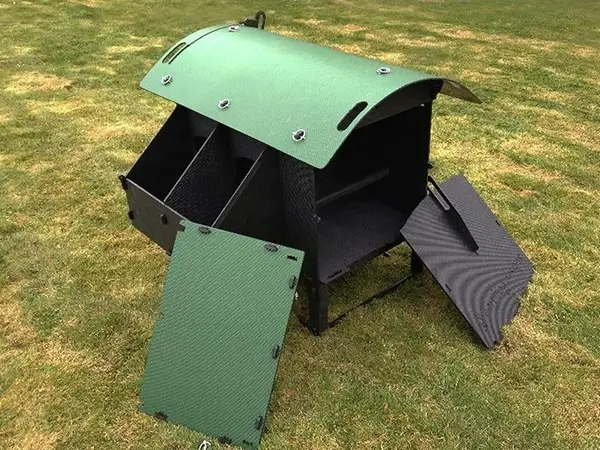
To explore that idea, they hand-built a prototype using fiberglass and resin (FRP – fiber-reinforced plastic), a technique commonly used in sculpture. The result was a smooth, curved form that looked more like a backyard pet house.
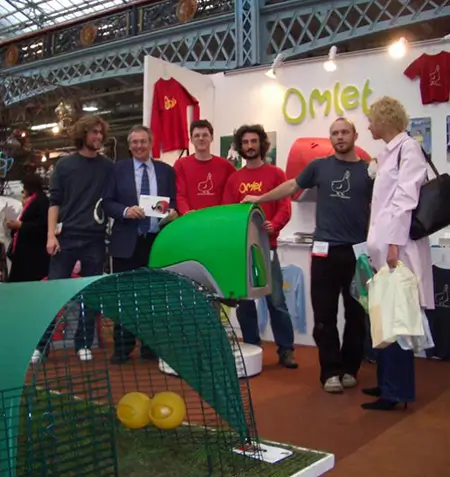
At their graduation show, over 500 visitors said they would actually keep chickens in their own gardens if they could have a coop like this. That moment made them realize there was an underserved market: urban backyard chicken keepers.
20 prototypes in 8 months
In the 8 months after the show, they built over 20 prototypes and tested them with volunteers, gradually improving the design to bridge the gap between “poultry farming” and “backyard pet keeping.”
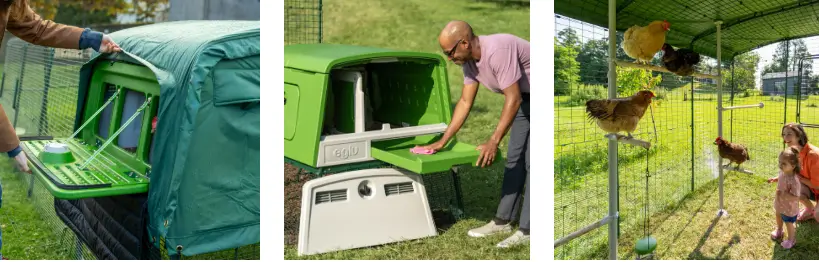
Here is how the final design solved multiple unmet needs that traditional coops ignored:
Slotted floor: Droppings fall into a removable tray underneath, keeping hens out of waste. Users slide out the tray and hose it down.
Side-door nesting box: Simplifies egg collection without reaching awkwardly inside.
Strap-supported door: Holds the door open like a small shelf, allowing customers to rest an egg basket while collecting.
Modular system: Swap parts, add/remove runs, or extend space with external mesh enclosures for flexible scaling.
Built-in handle: Enables pulling and repositioning the coop like a wheeled trash can.
Roosting bars: Match chickens’ natural perching posture.
Predator-proof runs: Ground-hugging skirt extends outward, blocking foxes, raccoons, and weasels from digging underneath.
How a Lean Supply Chain Enables Scale
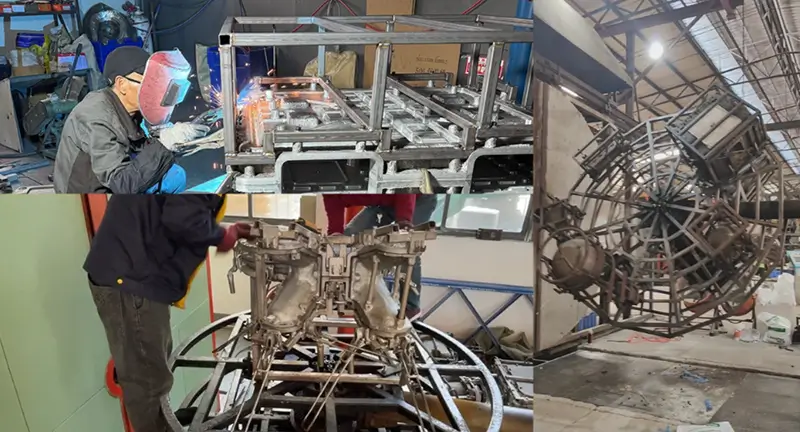
The original sculpture‑like prototype used fiberglass, but for mass production, they switched to polyethylene shells made by rotational moulding (rotomolding).
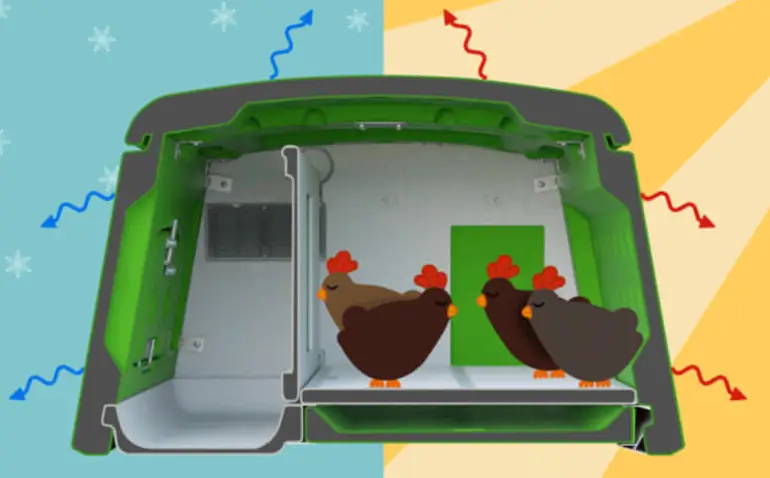
Rotomolding is a manufacturing process used to produce large, hollow, and complex plastic parts with uniform wall thickness. The double-wall structure creates an air insulation layer, helping the coop stay warmer in winter and cooler in summer. Parts come out as seamless, thick-walled shells with rounded edges, making them highly durable and suitable for outdoor pressure washing.
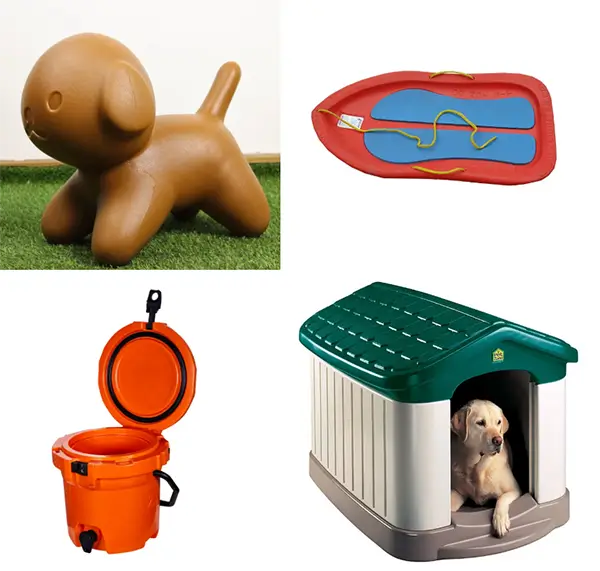
This process is commonly used for large, impact-resistant outdoor products such as plastic storage tanks, playground equipment, kayaks, and outdoor furniture.
Product R&D and design are based in the UK, where the original concept was developed. Manufacturing is outsourced to overseas partners specializing in large-scale rotational moulding.
Backyard Chicken Coop Market & Key Competitors
Looking at “pet‑style” backyard chicken coops market, we find that most fall into these segments:
Premium custom wooden coops
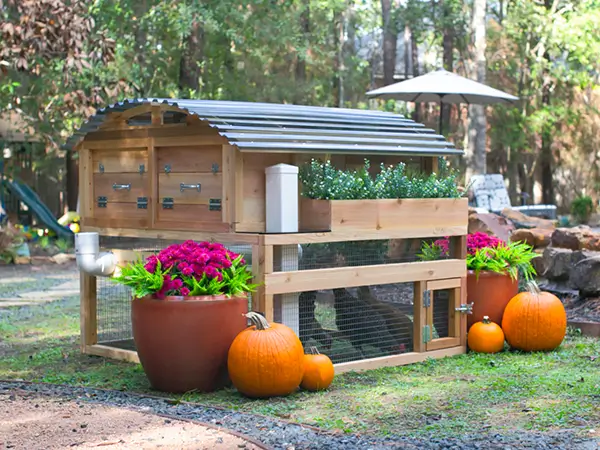
Brands like Roost & Root, Carolina Coops sit at the premium end of the market, emphasizing “backyard farm lifestyle.” They are typically locally built from wood, with customizable finishes and styles designed to blend into backyard landscaping and home architecture.
Roost & Root even extend into integrated greenhouses and raised garden beds, turning the whole setup into a unified backyard ecosystem.
Modular plastic coops
Companies like Nestera represent a more modular, cost-efficient approach. Their products use plastic panels combined with metal hardware and come as flat-pack kits that are easy to assemble and disassemble. This makes the structure easier to transport, clean, and expand over time. Accessories can be added depending on user needs.
DIY hardware metal coops
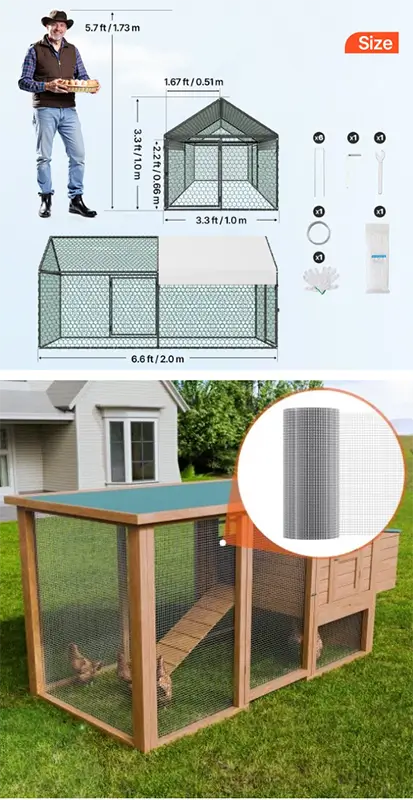
At the budget end, platforms like VEVOR focus on low-cost DIY metal mesh systems. These products are broken into components such as frames, mesh panels, and covers. Users can buy complete kits or combine parts to build their own setup.
Marketing Engine: Turning Knowledge Into Demand
Content as the "Entry Point"
Omlet understands the “new chicken keeper” anxiety and builds a content system that captures users before they ever make a purchase.
Breed guides, beginner how-to guides turn info searches into “Omlet knows backyard chickens best” brand trust.
Long-tail topics such as chicken waste composting, urban backyard design, and space optimization further extend reach into highly specific intent searches, especially among urban users planning small-scale setups.
Community-Led low cost, high retention system
Omlet also builds retention through a highly active user community. In forums, users share product experiences which carry more credibility than official marketing.
The forum also functions as a hybrid support system, where company representatives respond directly to installation issues. These responses remain indexed in search, turning customer support into long-term self-service content for future users.
A secondary market has also emerged within the community. Products are frequently resold between users, which strengthens perceived resale value and reduces the risk of first-time purchase. This dynamic indirectly supports new customer acquisition by lowering the barrier to entry.
How They Expanded Beyond Chicken Products?
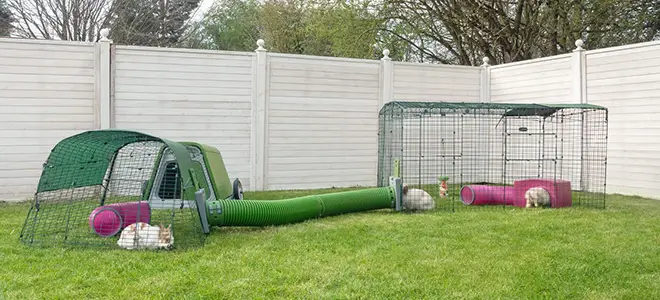
Omlet’s lineup now spans chickens to dogs, cats, rabbits, and guinea pigs. Their core coop design stays consistent, with adaptation mainly through sizes and add-ons for new species, such as rabbit tunnels. Within the chicken category, product development continues through functional upgrades that make coops more automated or easier to manage, including:
Subscribe to us to see more case studies like this one, plus startup stories, product ideas, sourcing insights, and China sourcing stories.
Wholesale and Customize
Have great product ideas but not sure where to start? Or maybe you’re looking to buy products in stock, add your logo, customize packaging, or place a small order for quick testing?
Share your ideas. Get affordable, and effective sourcing solutions!